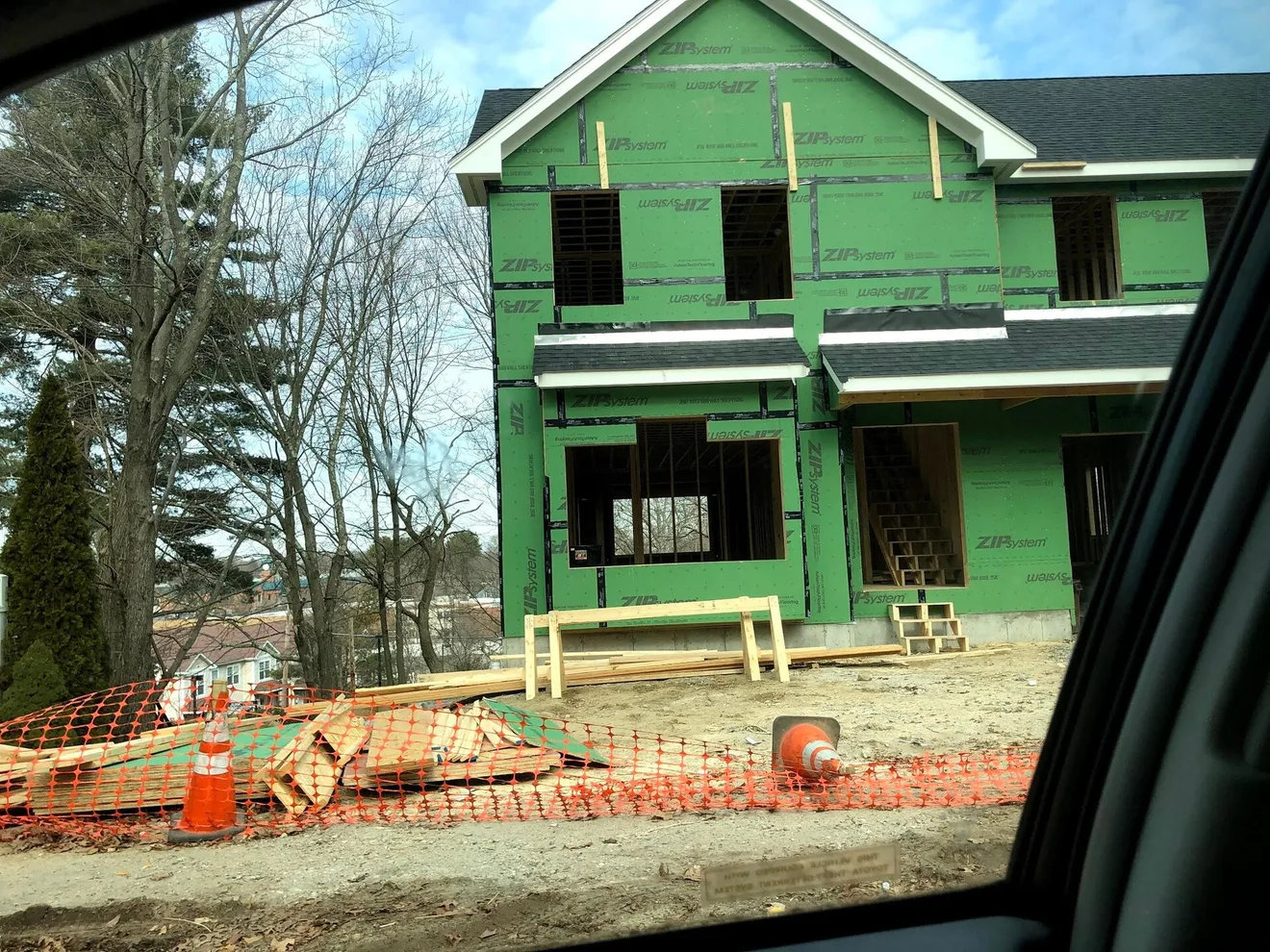
The National Association of Home Builders is pushing back hard on a new University of Alabama paper that says adopting newer building codes doesn't drive up home prices. In an Oct. 28 post, the trade group argued the study's methods can't support that conclusion, and that it's being used to wave away real costs builders face (via National Association of Home Builders).
The paper, titled "Do Housing Prices Change with Building Codes?", is by Sebastain Awondo, Shane Crawford and Lawrence Powell of the University of Alabama. NAHB describes it as a working paper from the school's Center for Risk and Insurance Research and says it was funded by the International Code Council and the insurance industry. The authors' summary of the paper doesn't list a funder, so that detail comes from NAHB.
Here's what the researchers say they did. They matched ATTOM home sales records from 2011 through 2022 against code histories in 26 states, covering 45 state adoptions of the 2009, 2012, 2015 and 2018 International Residential Code. Their models control for square footage, lot size, bedrooms, bathrooms, home age, timing of the sale and ZIP code.
For new homes, they report that most adoptions showed no statistically significant price change, and that the overall effect couldn't be distinguished from zero. When they widened the sample to include resales of homes up to 10 years old, significant price jumps after adoption were rare and drops showed up more often. A look at border counties in North Carolina and South Carolina found no sign that builders moved work across state lines after a code update. Their bottom line: putting off code updates probably won't make housing cheaper and could leave homes more exposed to hazards.
The ICC, which publishes the I-Codes, has put the study front and center on its affordability page. Its summary says the work covered about 2.7 million sales and that prices fell after 32 adoptions, rose after two and showed no significant change after 11.
NAHB's case against the paper leans on two reviewers. Paul Emrath of NAHB Economics, who reviewed a draft, said "the statistical model used for the analysis is poorly conceived, misapplied," and that "although NAHB provided feedback on the shortcomings of the paper, it is concerning" that it went out as a working paper without fixes. Leah Brooks of George Washington University's Trachtenberg School said the authors measured a correlation, not cause and effect.
The specific complaints get into the weeds, but several will sound familiar to anyone who's pulled a permit. The study doesn't know which code a given house was actually built under. It uses year built as a stand-in for permit date, so a house permitted under an older code but finished after a new one took effect gets counted wrong. NAHB also argues construction year is tangled up with home age and sale year, making it hard to separate code effects from inflation and market swings.
Brooks flagged the starter-home problem: "at the low value end of the market, it is possible that the additional costs in new codes may make some homes unprofitable to build." If those homes never get built, they never show up in sales data. NAHB also notes the study tracked new home sales rather than permits or starts, left out custom and owner-built homes, skipped the energy code entirely and looked at state-amended codes rather than the unamended model versions.
That energy-code gap matters to NAHB, which estimates the 2021 International Energy Conservation Code can add $9,600 to $21,400 to the cost of a new single-family home. The federal government has also weighed in on that edition. In April, HUD and USDA rescinded a 2024 rule that would have required new homes financed with FHA or USDA-backed mortgages to meet the 2021 IECC, with HUD citing estimates of $20,000 to $31,000 per home if that code were enforced nationwide.
Why it matters for Contractors
Code adoption fights happen at the state and city level, and this study will likely get cited in hearings where newer IRC and IECC editions are on the table. If your state or town is considering an update, expect both the Alabama paper and NAHB's critique to come up.
For a small shop, the useful piece isn't which economist wins the argument. It's knowing your own numbers. If you can show what a code change actually adds to a typical job in your market, from insulation and windows to extra inspections and redesign time, that carries weight with local officials that national studies don't. Your local home builders association is usually the place to plug into those comment periods.