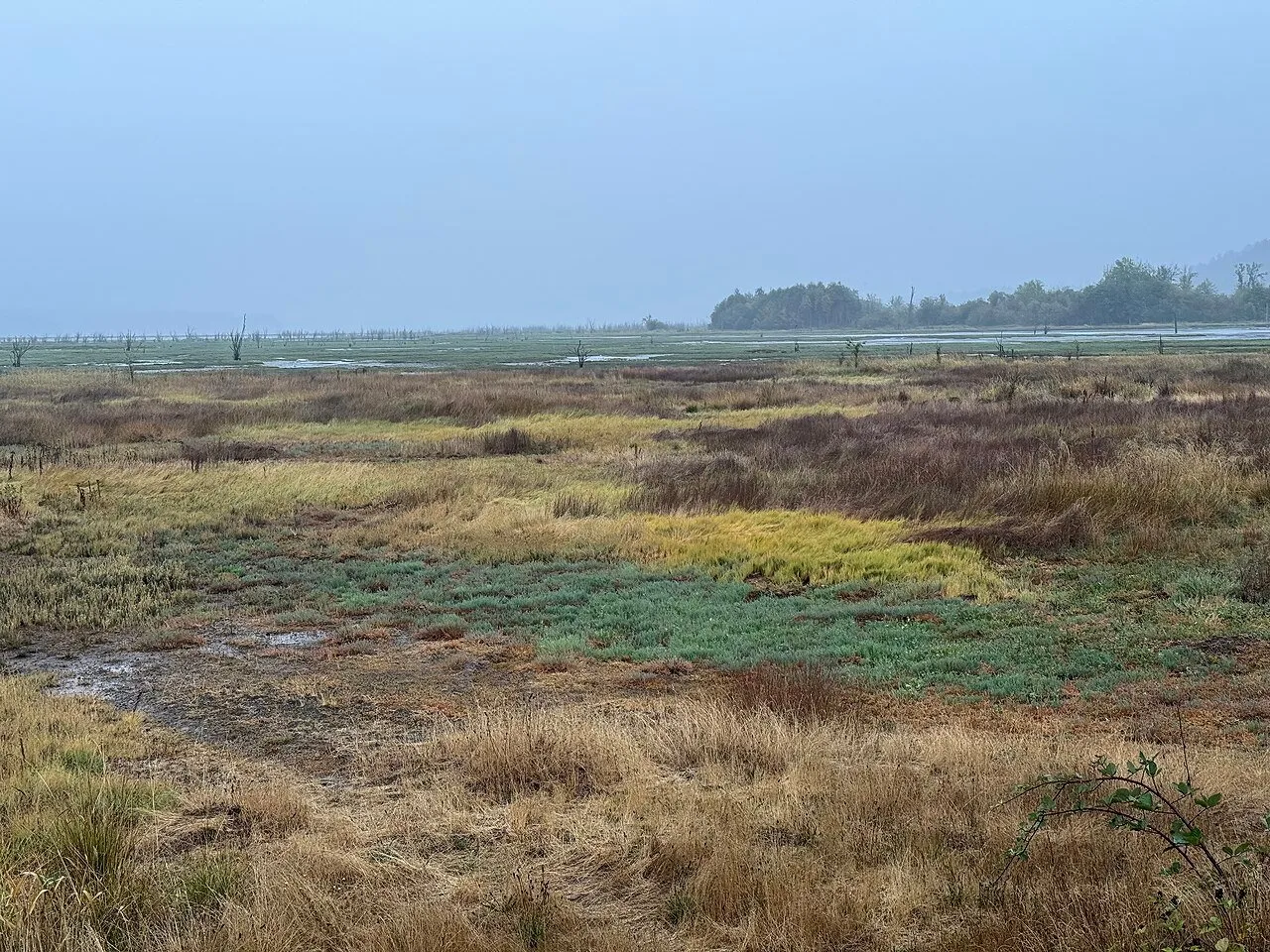
If you build on rural lots in unincorporated Thurston County, the rules that decide how close you can get to a wetland, stream or steep slope are up for a rewrite, and Thurston County wants to hear from you. The county Planning Commission will hold public hearings on proposed changes to the Critical Areas Ordinance on Wednesday, Dec. 2, and Wednesday, Jan. 6 (via Thurston County).
Both hearings start at 7 p.m. in Room 110 of the county building at 3000 Pacific Ave. SE in Olympia, and you can also join on Zoom. The county says the Zoom link will be posted on each meeting agenda on the Planning Commission's web page. Written comments are due by noon on Jan. 6, 2027.
The Critical Areas Ordinance controls development, land use and permitting in five kinds of areas the state requires counties to protect: geologically hazardous areas such as landslide-prone slopes, frequently flooded areas, critical aquifer recharge areas that feed drinking water, fish and wildlife habitat, and wetlands. In other words, it decides whether you need a critical areas review, how big your buffers are and what reports you'll pay a consultant for.
The county says the update is meant to improve how permits are handled, make the rules clearer and more flexible, and bring standards in line with newer science and state guidance. Proposed changes include buffers for wetlands, streams and steep slopes. The county's project page notes the last major update was adopted in 2012, and state requirements and the science have both moved since then.
The volunteer commission has spent most of 2026 working through the ordinance chapter by chapter, with work sessions on geologic hazards, aquifer recharge, flooding, wetlands and habitat running from June through early November. A Nov. 10 hearing draft, in both clean and marked-up versions, is posted with the commission's materials.
Earlier working drafts give a sense of what's on the table. A September draft of the habitat chapter ties stream buffers, which it calls riparian management zones, to the height a site's trees would reach at 200 years, with widths of 100 to 250 feet depending on the stream type. A March draft of the geologic hazards chapter requires a critical areas review permit for work within 300 feet of mapped landslide features and sets geotechnical report requirements based on how close a project is to a hazard. It references updated 2025 landslide hazard mapping. Those are drafts, and some of that language may already be in current code, so check the marked-up hearing draft to see exactly what's changing.
After the hearings, the commission will review the comments and send its recommendations to the Board of County Commissioners, which will hold its own deliberations before voting. The project page shows the commission finalizing its recommendation in February or March 2027, and no board vote date has been set. The county commissioners put the update on their 2026-27 planning work plan in May with two stated goals: stronger protections and simpler permitting.
There's also an open house before the hearings. The project page lists a community open house at 5 p.m. on Wednesday, Nov. 18, at 3000 Pacific Ave. SE, ahead of the commission's 6:30 p.m. meeting.
Comments can go in through the county's online form, by email to Associate Planner Claire Swearingen at claire.swearingen@co.thurston.wa.us, or by mail to Thurston County Community Planning and Economic Development, attention Claire Swearingen, 3000 Pacific Ave. SE, Olympia, WA 98501. Questions about the update can go to Swearingen at 360-968-9989.
Why it matters for Contractors
Critical areas rules hit small builders hardest on rural and edge-of-town lots, where a wetland, creek or slope can shrink the buildable area, push a house or septic system around the site, or add a geotech or wetland report to your costs before you've broken ground. A change in buffer widths or report triggers can make a lot you're eyeing better or worse.
If you've got lots under contract or permits in the pipeline, pull the marked-up hearing draft and compare it to the current code for your situation. Ask county staff how projects already in process will be handled.
And show up or write in. Planning commissions hear plenty from environmental groups and neighbors; they hear a lot less from the people who actually pull the permits. A short, specific comment on how a buffer or report requirement would play out on a real lot carries weight. The deadline is noon on Jan. 6.