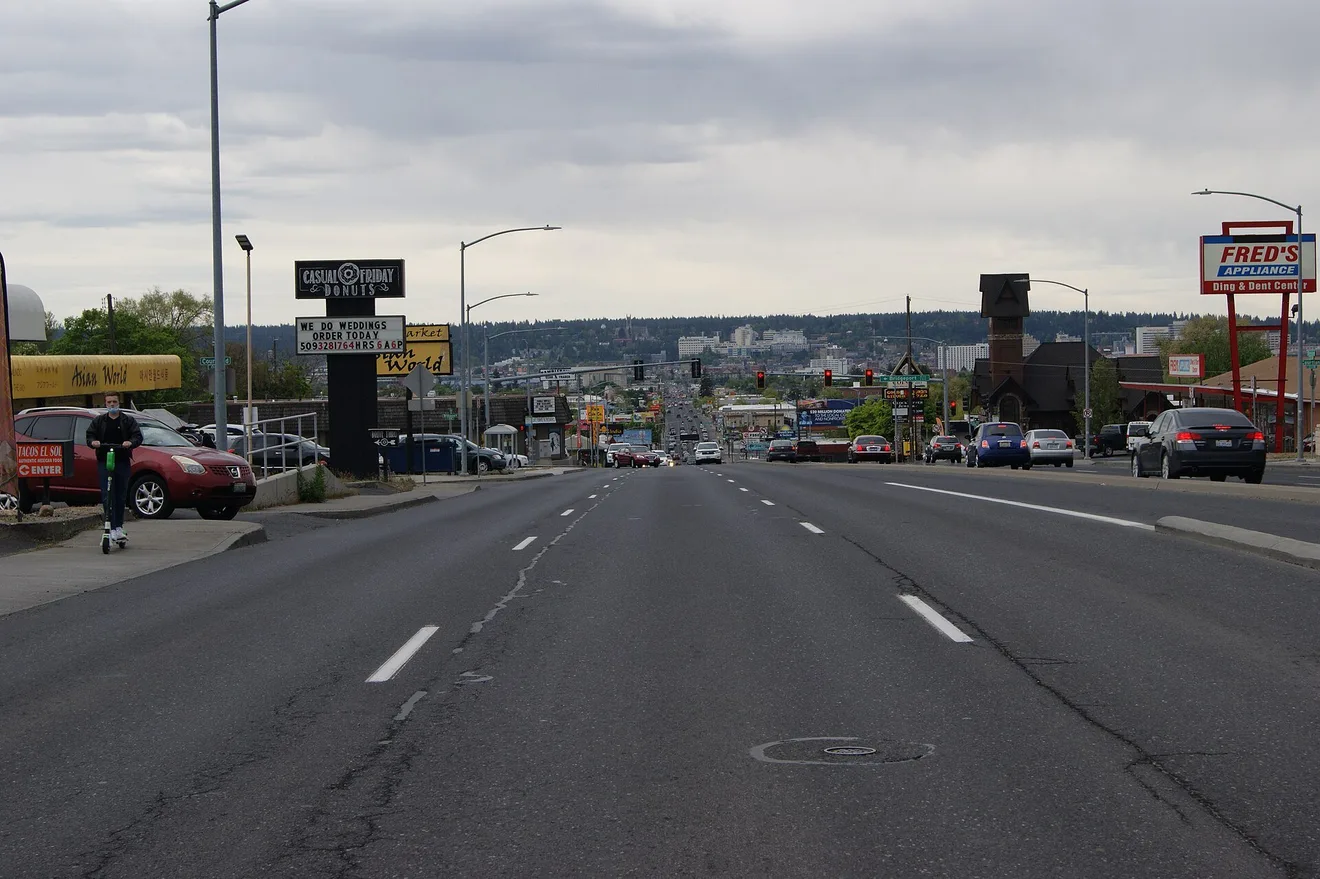
The Spokane City Council has voted 6-1 to adopt the Division Street Transit-Oriented Development Plan, a long-range blueprint for one of the city's busiest corridors (via KXLY). KXLY's report on the vote didn't say who cast the lone no vote or why.
The plan runs more than 200 pages and covers about nine miles of Division, from the Spokane River north into unincorporated Spokane County, ending near East Farwell Road and the Newport Highway, according to the city's public draft. It was put together by the City of Spokane, Spokane County and Spokane Transit Authority, with a $405,000 grant from the Federal Transit Administration's transit-oriented development planning pilot program, the city's project page says.
Don't expect it to change what you can build next month. Colin Quinn-Hurst, the city planner on the project, called it "high-level guidance, like a vision for the next 20 to 30 years on the corridor." Each piece has to be taken up on its own, KXLY reported, and that means changes to the city's development code plus infrastructure spending the city expects to cover mostly with state and federal grants. "It's almost like a giant cruise ship. To start making a turn takes quite a while," Quinn-Hurst said.
The city's Plan Commission, which recommended adoption after an Aug. 26 hearing, framed it the same way. Its findings describe the plan as city policy to guide growth and public investment along the corridor, with land use and zoning district changes expected to roll into the PlanSpokane 2046 periodic update of the comprehensive plan, which the commission is still reviewing.
The first focus will probably be the stretch between the Spokane River and Mission Avenue, according to KXLY. Early projects include wider sidewalks, more street trees and new bike lanes, including one on Ruby Street, along with walking and biking improvements on Sharp Avenue and better crossings on Longfellow Avenue. Lane reductions on Division are on the list as a longer-term change. The city has said some changes could come within about six years, though that timeline isn't set.
One item worth watching: a proposed ban on new drive-thrus within a quarter mile of bus stops. Spokane is already headed that way. In April, city staff presented a temporary moratorium on new drive-thru and quick vehicle service uses within an eighth of a mile of frequent bus stops, in the Division study areas and near planned Division bus rapid transit stops. Staff said existing businesses and projects already in for permits wouldn't be affected, and that permanent rules would come through the comprehensive plan update.
On housing, the public draft points to a range of building types along the corridor, from townhomes, duplexes, triplexes and courtyard apartments up to mid-rise buildings near the busiest transit nodes. It also recommends keeping parking behind or beside buildings and limiting the size of surface lots. Most of the Division frontage inside the city is zoned General Commercial today, and the draft notes that the city's multifamily zones already allow denser infill.
The plan is timed around two big projects. STA's separate Division bus rapid transit line won't start building additional stops until 2028, with service expected in 2031, KXLY reported. The plan also anticipates traffic easing on Division once the North Spokane Corridor freeway is finished. Regional traffic modeling has projected that the freeway will pull freight and through traffic off Division, the Inlander has reported.
Why it matters for Contractors
For now this is a policy document, not a rezone. Nothing in it changes what a permit counter will approve today, and the specifics, like which parcels get new zoning, how much density is allowed and where drive-thrus are barred, will be set later in code amendments and the PlanSpokane 2046 update. Those are the hearings worth showing up for, or at least following.
If you build small infill, think townhomes, duplexes, triplexes or small mixed-use, the plan clearly points toward more of that along Division, especially near future BRT stations and the river-to-Mission stretch. For remodelers and small commercial contractors, the drive-thru limits matter too, since they'll shape what kinds of tenants and buildings go on corridor lots. Before taking a job or bidding a lot near Division, check whether a moratorium or new overlay applies. The timeline runs years, not months, so this is one to track rather than act on right away.