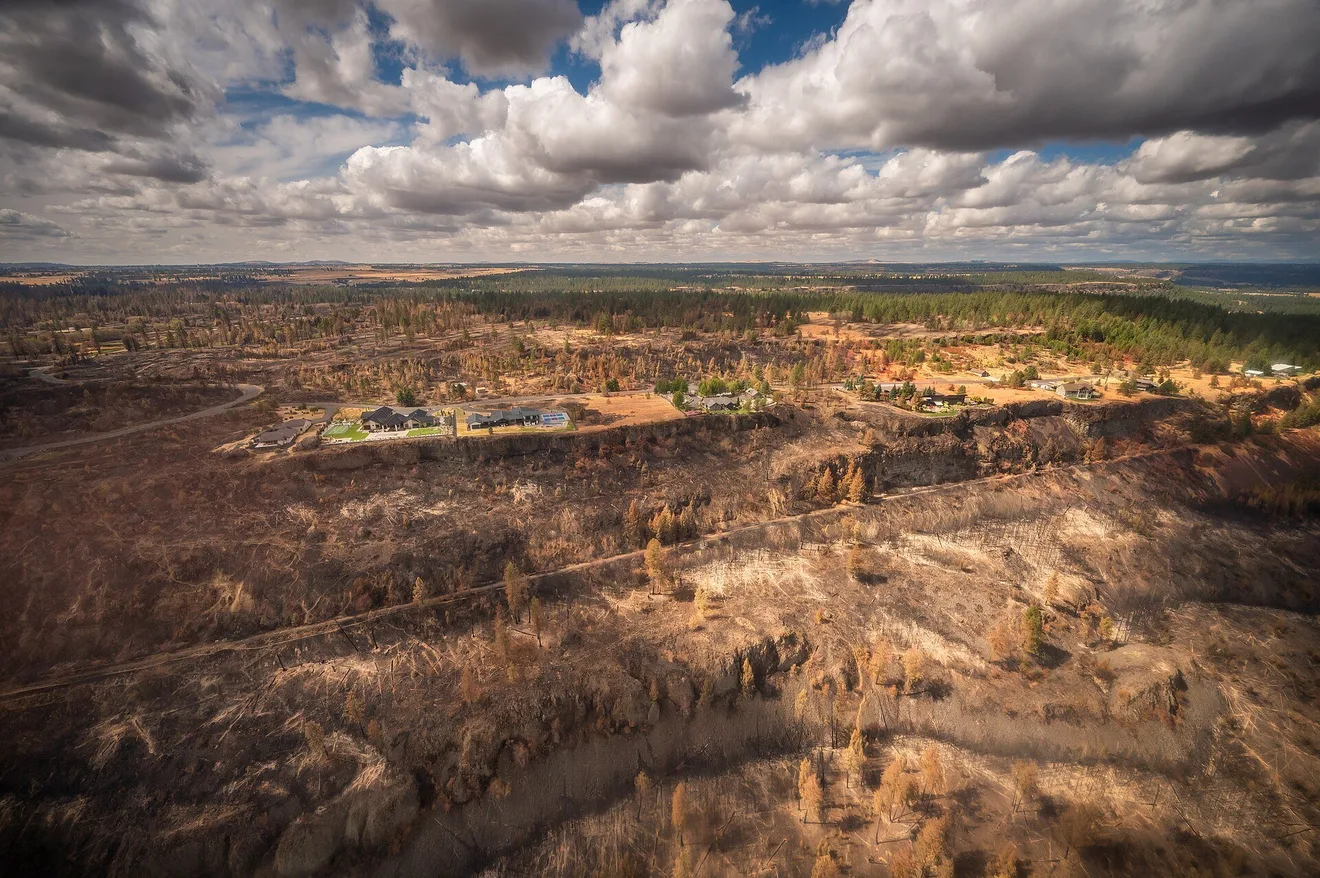
Homeowners rebuilding after this year's Washington wildfires, and the contractors doing the work, just got some breathing room on the energy code. The State Building Code Council adopted an emergency rule on Oct. 30 that lets local building departments relax residential energy code requirements for homes being rebuilt after a declared disaster, and the rule took effect when staff filed it on Nov. 4 (via Washington State Building Code Council).
The council says the goal is to lower construction costs, ease paperwork and speed up permits for families trying to get home. In its filing, the council said nearly 700 families faced sudden homelessness and long displacement after the fires.
What the rule allows
The rule adds a new section, WAC 51-11R-10100E, to the residential energy code. It's optional: each local jurisdiction decides whether to use it. Where a jurisdiction opts in, a qualifying rebuild can follow one of two paths:
- Use the edition of the Washington State Energy Code that was in effect when the home was originally built, but nothing older than the 2015 edition.
- Follow the current code, but with two fewer of the additional energy efficiency credits the code normally requires.
A few strings come with it. The home has to be in an area covered by a governor's emergency proclamation and damaged or destroyed by the disaster. The rebuilt house can't be more than 500 square feet larger than the original. The permit application has to be filed within two years after the emergency proclamation expires. And the break ends if the property changes hands, with exceptions for deed-of-trust transfers and transfers between family members.
How we got here
The fires hit hard this summer. In a Sept. 28 request for a federal major disaster declaration, Gov. Bob Ferguson's office cited fires in late July and early August, including the Spokane Complex fires and the Kaiser Canyon and Sinlahekin fires in Okanogan County. Preliminary counts at the time showed 649 primary residences destroyed, 615 of them in Spokane County, and about 369,000 acres burned. In an Oct. 8 letter to the council, Ferguson put the number of primary residences lost to wildfire this year at nearly 1,000 and asked for energy code relief limited to owners at the time of the fire.
The council didn't jump straight to a rollback. A September report it sent the governor said targeted credit relief was a more focused option than rolling back a whole code edition. Two Eastern Washington legislators, Rep. Suzanne Schmidt and Sen. Shelly Short, wrote in support in mid-October, saying families who lost homes "are already facing significant financial hardship and uncertainty."
Local departments have already been moving. The City of Spokane issued its first rebuild permit after the Spokane Complex Fire in late August, two days after the application came in, using the homeowner's 2023 plans. It also cut demolition and cleanup permit fees to $35 and waived processing and technology fees.
What the credits mean in practice
Washington's residential code requires extra efficiency credits on top of the base requirements, and the number depends on house size. Under the current code, a medium-size house needs 8 credits, a small house (under 1,500 square feet of conditioned floor area and under 300 square feet of windows) needs 5 and a large house over 5,000 square feet needs 9, according to the state code. Knocking off two credits brings a medium house down to 6. The 2015-era rules, for homes old enough to qualify, required 3.5 credits for a medium house, per the state's code archive.
One timing note: under state law, an emergency rule can't stay in effect for more than 120 days after filing unless it's readopted under limited conditions. Counting from Nov. 4, that's early March 2027. The filing doesn't say whether a permanent rule is planned.
Why it matters for Contractors
If you're rebuilding homes in Spokane, Stevens, Okanogan or other fire-hit areas, this can take real cost out of a job: fewer credits can mean simpler mechanical, envelope and water heating choices. But it only applies where the local building department has opted in, so call the jurisdiction before you price anything.
Get the details right on each job. Confirm the home's original construction date and which code edition applied, keep the rebuild within 500 square feet of the original, and make sure your client still owns the property. Most of all, watch the calendar. The emergency rule runs on a roughly 120-day clock, so if you have clients ready to go, getting permit applications in sooner is the safer bet until the council says what comes next.