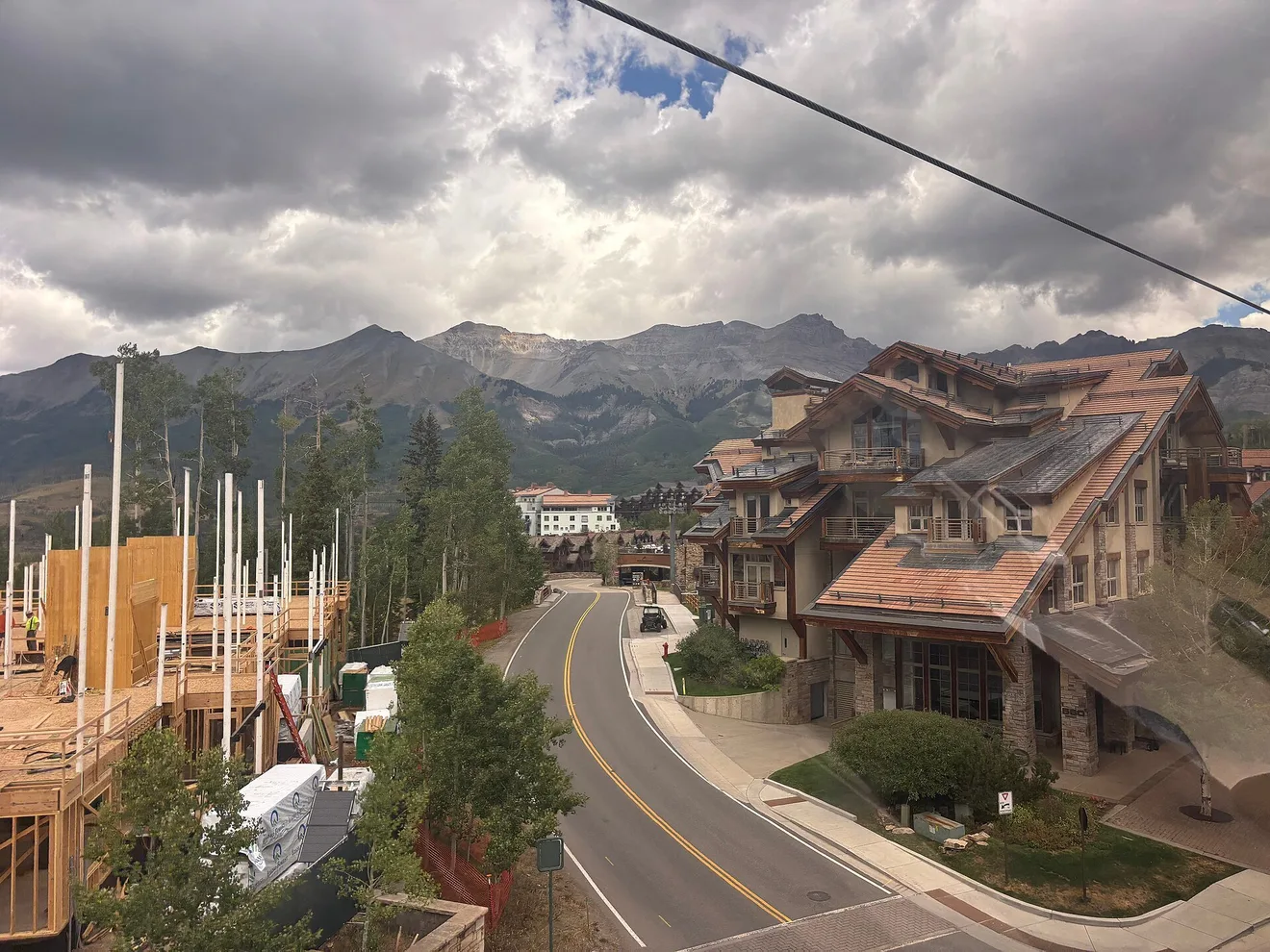
A judge in Ouray County has sided with the Town of Ridgway in its fight to stop MTN Lodge from leasing its 52 rooms long-term to crews building the $1 billion Four Seasons Resort and Residences in Mountain Village, roughly an hour's drive away (via The Colorado Sun). The hotel's owners are appealing.
District Judge D. Cory Jackson granted the town a preliminary injunction that blocks the rental agreement between the lodge's owner, Ridgway Suites LLC, and Merrimac Ventures, the Fort Lauderdale developer behind the Four Seasons. It's a temporary order, not the end of the case, but it lands as construction on the resort ramps up and the developer is still looking for more places to put workers.
The dispute has been building all year. Ridgway's town council met in closed executive session on Jan. 26 for legal advice on MTN Lodge's "proposed use and compliance with the Ridgway Municipal Code," according to the meeting agenda. By late March the council had voted unanimously to sue, KVNF reported, and the station said the hotel had agreed to house Four Seasons construction workers for four years.
A March 31 statement from the lodge's owners, posted by the Ridgway Area Chamber of Commerce, called the deal an "extended reservation agreement" with Merrimac. The developer planned to house subcontractors based on which trades were needed at each stage of the build, while the public could still book rooms nightly when space opened up.
The ruling turns on two definitions in Ridgway's land use code. A "lodging facility" offers stays of fewer than 30 days. "Household living" covers stays longer than 30 days with kitchens, and that use isn't allowed in the lodge's zone. The town argued that months-long worker leases didn't fit cleanly into either category.
Jackson agreed. "The new use is inconsistent with the land use code and the injunction therefore works to serve the existing understanding of the code," he wrote, according to the Sun.
There's a tax angle, too. KVNF reported that the town says the deal still requires the hotel to pay lodging and sales taxes, which the owners have refused to do. The owners say town code exempts stays of 30 days or more. In his ruling, Jackson wrote that the hotel's position on those taxes "undermines MTN's economic benefit argument."
The owners, who bought the hotel in 2021, have pointed to single-digit visitor occupancy in the winter months. They argued that the 50-plus workers staying through the winter would give the area an economic boost, and that losing the Merrimac deal would mean laying off hotel staff and possibly closing.
In asking the judge to pause the injunction during the appeal, MTN Lodge said workers already living there "would be required to vacate on short notice," and that finding them new rooms would be "incredibly difficult to impossible," likely pushing them into even longer commutes. The owners told the Sun they're disappointed but are complying with the order while the appeal plays out.
The Four Seasons project includes 52 hotel rooms and suites, 43 hotel residences and 26 private residences across three connected buildings, according to the developer's announcement, with Olson Kundig as architect. The Sun reported that the developers have bought or leased several hotels and cabins around the region for workers.
That hasn't sat well with some neighboring communities. A July 2025 letter from officials in the west ends of San Miguel and Montrose counties asked Merrimac to spell out broader community benefits, saying the project's benefits "flow inward" to Mountain Village while the towns housing its workers "anticipate few, if any, long-term benefits."
Why it matters for Contractors
If you're bidding or working on a big resort job in a mountain town, don't assume crew housing is settled just because someone signed a lease. This case shows a town can challenge a long-term hotel deal through its zoning and tax rules, and a judge can halt it in the middle of a project. Workers already living at the lodge now face the risk of moving on short notice.
For a small sub, the practical move is to ask the GC or developer early who's providing housing, where it is, and what happens if it falls through. Know whether lodging and drive time are built into your price or whether you're on the hook. If you're lining up rooms yourself, a quick call to the town's planning office about stays over 30 days can head off a bad surprise. And price the commute honestly: when nearby rooms disappear, an hour-plus drive each way comes out of your crew's day and your margin.