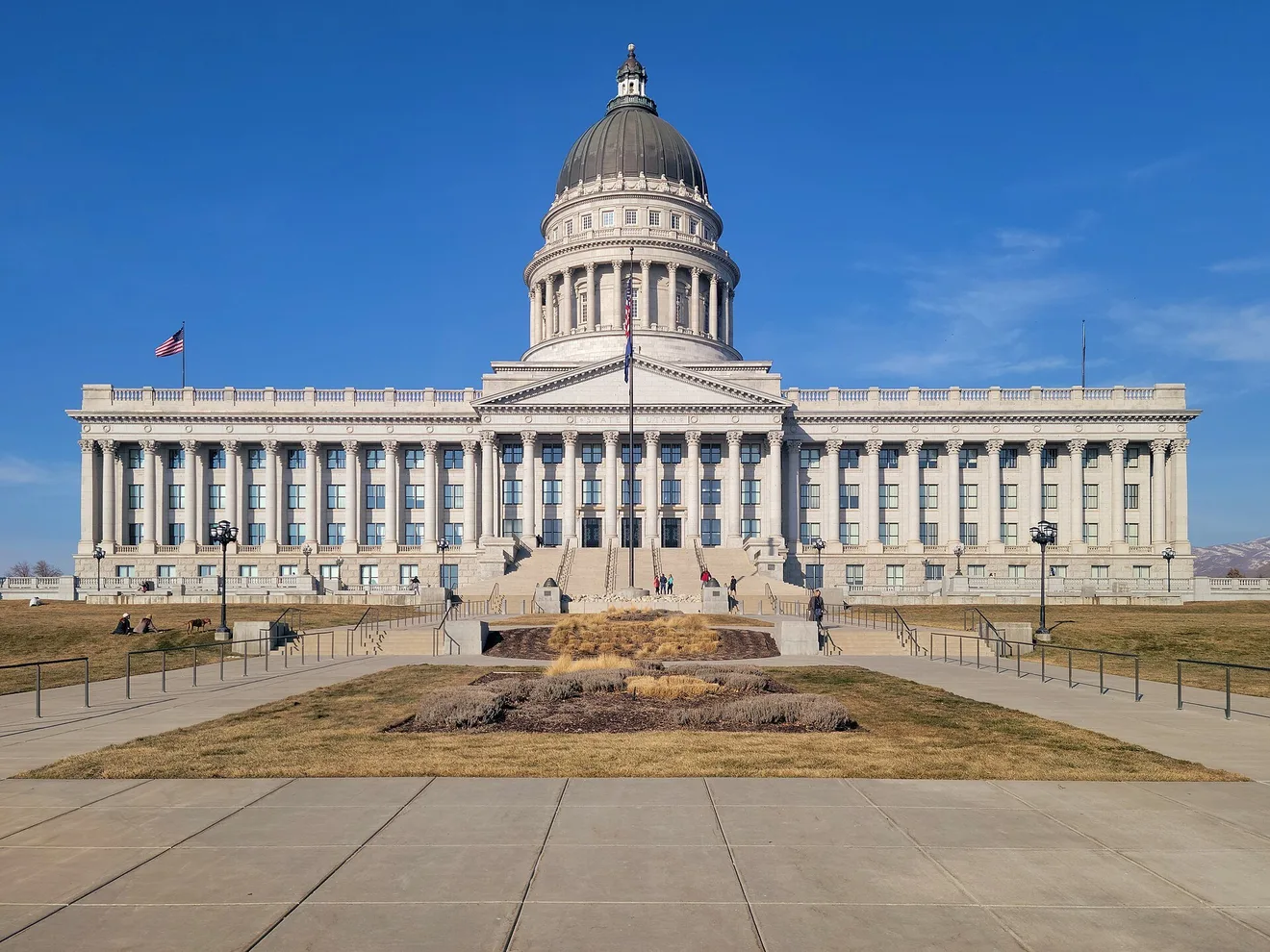
Utah's experiment with letting large landowners form their own towns may not survive the 2027 legislative session. On Wednesday, Nov. 18, the Legislature's Political Subdivisions Interim Committee endorsed draft legislation that would wipe out the 2024 law creating "preliminary municipalities" and dissolve the ones already formed (via Utah News Dispatch).
The bill was presented by Rep. Tiara Auxier, a Republican who narrowly lost her seat in the Nov. 3 election. Because the committee endorsed it as a committee bill, it's expected to get priority when the 2027 general session opens in January, with another lawmaker likely to carry it. KPCW reported that it's still unclear who that sponsor will be.
The law at issue is SB258, passed in 2024 and signed by the governor that March. It set up a pilot program that lets as many as three private landowners in a mostly undeveloped, unincorporated area petition to become a preliminary municipality, a first step toward forming a town. The landowners' development has to include at least 10% affordable housing. The bill text defines that as housing for households earning no more than 80% of area median income.
In practice, that gives a developer a path to the land-use approvals a county would otherwise control. Supporters pitch it as a tool to ease the housing shortage and protect property rights. Critics, including officials in Wasatch and Summit counties, say it hands zoning power to the same people asking for approval.
Seven preliminary municipalities have been attempted so far, most of them in Wasatch County, according to Utah News Dispatch. Most were rejected or are still pending. The one that has made it through is Echo Canyon in Grand County, near Moab. KPCW reported that if the repeal passes, Echo Canyon's new roads and infrastructure would become Grand County's responsibility. Some Grand County residents are separately asking a judge to declare the law unconstitutional.
Proposed towns still in the pipeline would be stopped too. KPCW named two: Browns Canyon in Summit County, which Ivory Development is pursuing near Park City and Hideout, and Wasatch Highlands east of Heber.
This is Auxier's third run at the law. Her 2025 repeal bill failed, and so did a 2026 compromise that would have added guardrails. She told the committee the law can't be fixed with procedural tweaks.
"Should private landowners be able to establish a municipal government with zoning authority before the people affected by those decisions have elected representatives who are accountable to them?" Auxier asked, according to KPCW. She argued that the law moved land-use authority away from elected county officials to a board picked by the landowners seeking approval. "I don't think that's local control," she said.
Chris Gamvroulas, president of Ivory Development, pushed back during public comment. He described the law as an exit for landowners with vested rights who face what he called "weaponized county government," and said it isn't a giveaway. "No one in their right mind wants to use this tool," he said. He asked lawmakers to replace the law with something that better protects property rights if they repeal it.
Not everyone on the committee was sold. Sens. Don Ipson of St. George and Calvin Musselman of West Haven voted against endorsing the bill. Musselman raised the risk that landowners could sue the state if it passes. Reps. Jordan Teuscher of South Jordan and Jill Koford of Ogden urged caution and a balance between local control and private property rights.
House Speaker Mike Schultz told Utah News Dispatch last month he's open to changing the law or repealing it outright.
Why it matters for Contractors
If you build in rural, unincorporated Utah, especially in Wasatch, Summit or Grand counties, this decides who signs off on big projects. Right now, a preliminary municipality's appointed board handles land use. A repeal would send that authority back to the county, with county planning commissions, hearings and timelines.
For smaller shops, the practical risk sits with subs and suppliers lined up for work inside a proposed or existing preliminary municipality. If you're bidding roads, utilities or homes in one of these areas, ask the developer what happens to the approvals and your contract if the town is dissolved, and keep an eye on the bill once it's numbered in January.