Honolulu's Bill 7 program was supposed to help small builders put up affordable apartments on small lots. Seven years in, it's well short of its goal, and a new University of Hawaiʻi Economic Research Organization report points to slow permits and higher costs as major reasons (via UHERO).
The report, "Assessing Honolulu's 'Bill 7' Housing Program," was published Nov. 9 and funded by the city's Department of Housing and Land Management. Its authors are Trey Gordner, Sakura Takahashi, Edith Prager and Rafael Cecilio Munoz.
How the program works. Bill 7, enacted in 2019 as the Affordable Rental Housing Program, offers fee waivers, grants and a property tax break to encourage rental projects on lots of 20,000 square feet or less in apartment and mixed-use zones. At least 80% of units must rent to households at or below 100% of area median income for at least 15 years. UHERO says nearly all projects actually restrict all their units to 80% of AMI. Projects don't have to provide off-street parking, under the original ordinance.
The numbers. The city's aim was at least 500 new affordable rental units a year. UHERO found that 85 projects with 2,280 units have entered the program since 2019, but only seven projects with 224 units are complete. As of September 2026, another 776 units in 22 projects had permits. No year has hit 500.
The city disputes part of that count. A Department of Planning and Permitting spokesperson told Honolulu Civil Beat that 412 units across 11 projects are complete, and said "a complete assessment should consider both completed housing and projects moving toward construction and occupancy."
The permit problem. The ordinance gives the city 90 days to act on a permit, but UHERO says that deadline has never been met. The median time from a complete application to a permit was 531 days for the 19 permits issued before July 2025. Each month of delay costs a representative project about $74,000, the researchers estimated.
Costs moved the other way, too. UHERO says Honolulu construction costs are up about 30% since 2019, and the prime rate rose from 5.5% to as high as 8.5% in 2023.
On a representative 10,000-square-foot lot, the researchers found Bill 7 raised the potential project from 26 units to 49 and lifted the estimated return on cost from 5.0% to 6.2%. That's still under the 6.6% industry benchmark the study used.
"It's directionally right," Gordner told Civil Beat. "But it's much more expensive today to build under this program."
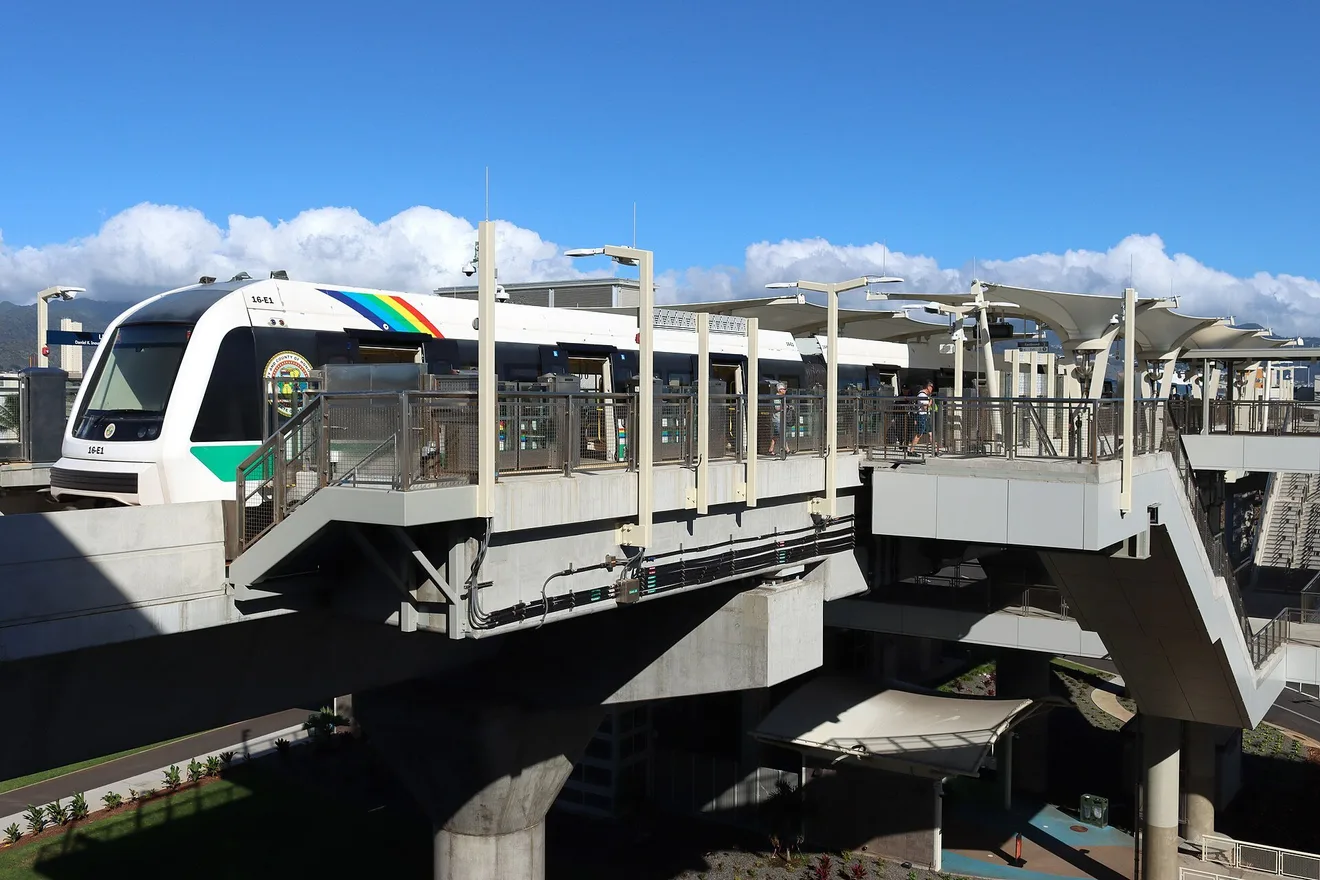
Every Bill 7 project studied is within a quarter-mile of a bus stop, and six are within a half-mile of a current or planned Skyline rail station.
What UHERO recommends. The report suggests allowing more units per project, speeding up permitting by cutting review rounds, paying construction grants earlier and without wage conditions, and keeping the 15-year property tax exemption. City Council Chair Tommy Waters told Civil Beat the report shows where improvements are needed, "particularly in reducing permitting delays."
Why it matters for Contractors
If you're a small builder on Oʻahu weighing a Bill 7 project, plan for the permit timeline UHERO measured, not the 90 days in the ordinance. At roughly $74,000 a month in carrying costs on a typical project, a year and a half of review can wipe out the margin before you break ground.
The incentives are real: more than $950,000 in fee waivers per project compared with non-Bill 7 projects, per-unit grants and a 15-year tax break. But the study says the math is tight even with them.
Watch the City Council. If it acts on UHERO's recommendations, such as higher unit counts, fewer review rounds or earlier grant payments, the numbers on small-lot rentals could improve.