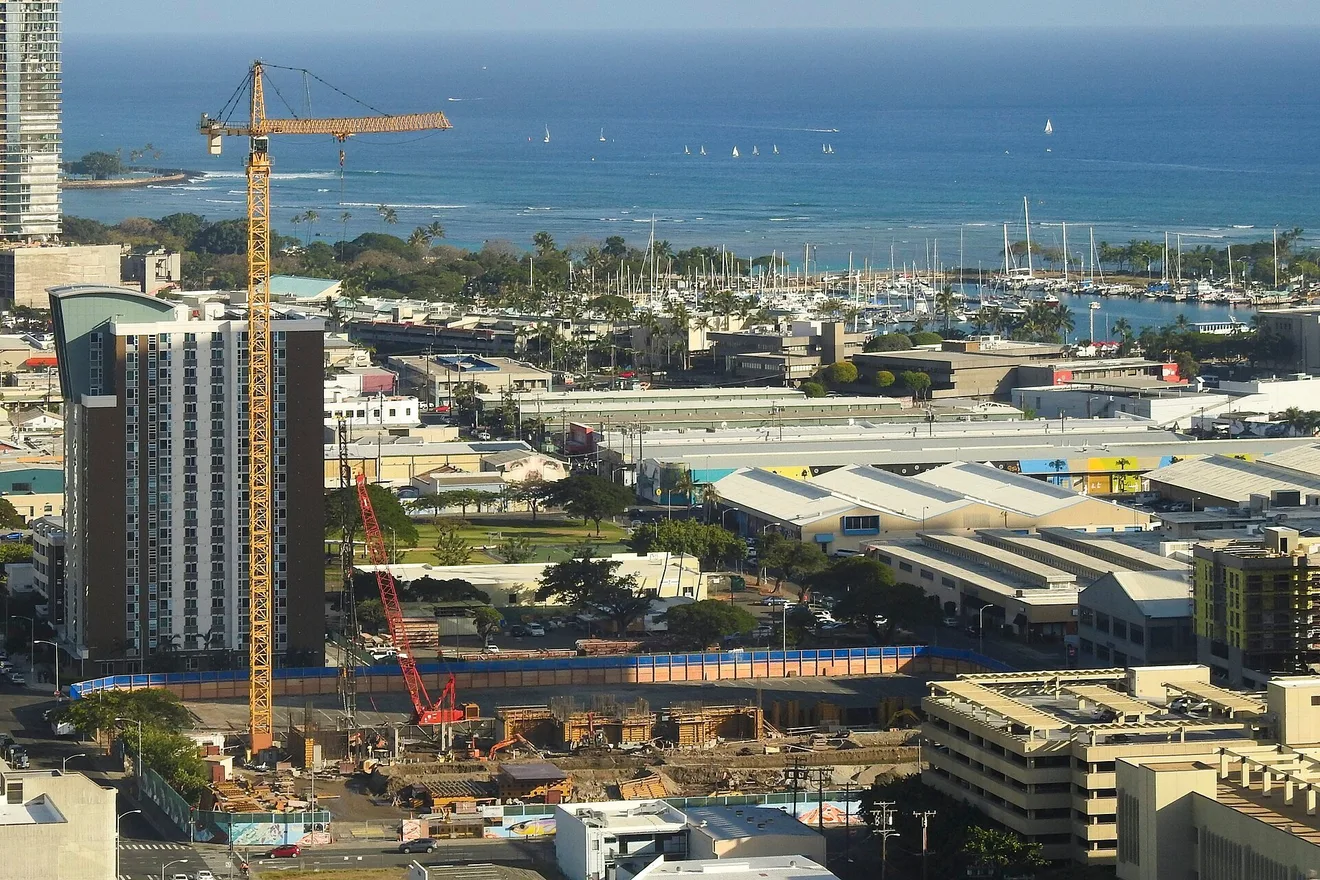
Hawaii voters appear to have approved a constitutional amendment that lets counties borrow against future property tax growth to pay for roads, water lines and sewers in designated districts, a shift that could take some of those costs off developers' books. Question 2 was passing with 64.5% of the vote in early returns Tuesday night (via Civil Beat).
Those early numbers covered mail ballots processed statewide through Saturday and some in-person ballots on Maui and Oahu. The final printout was expected Wednesday, and official certification typically takes about two weeks, so the results are still unofficial.
Question 2 directs the Legislature to let counties issue what are called resilient infrastructure for shelter and equity bonds, or RISE bonds. The ballot language says the bonds would pay for public improvements in designated districts, would be repaid only from future growth in property tax revenue inside those districts rather than higher tax rates, and wouldn't count against the counties' debt limits (Hawaii Office of Elections).
It's a version of tax increment financing, which is used in 48 other states. Hawaii law already allows it on paper, but the state attorney general has taken the position that it's unconstitutional because the state constitution doesn't explicitly authorize it, according to Civil Beat. The amendment is meant to settle that.
Here's how it works in practice. A county sets a baseline for property values in a district before new construction. Tax revenue above that baseline, the increment, pays off the bonds, while the county keeps the baseline revenue. If the district's revenue comes up short, bondholders bear the loss, not the county (Hawaii Public Radio).
The measure, SB 3219, passed the Legislature unanimously in May: 25-0 in the Senate and 50-0 in the House.
Supporters said the change would let counties, instead of developers, carry the cost of infrastructure needed for housing along Honolulu's Skyline rail line, including the redevelopment planned around the Halawa station at Aloha Stadium. That project covers 88 acres of state land and more than 4,000 planned homes, according to an earlier Civil Beat explainer.
The campaign was backed heavily by the construction industry. RISE Together Hawaii, a ballot committee led by a Carpenters union fund, drew money from the Regional Council of Carpenters, the Operating Engineers, the Building Industry Labor Association of Hawaii and developer Stanford Carr Development, among others. Unions and business groups spent more than $2.8 million on ads, Civil Beat reported.
Opponents, including the Tax Foundation of Hawaii, warned that counties could end up raising property taxes on everyone to cover services in the new districts.
State Rep. Luke Evslin, who chairs the House housing committee, put the issue plainly in October: "The biggest challenge of infrastructure in Hawaii is that it costs a lot of money, and somebody's gotta pay for that." He estimates the state needs about 78,000 more homes and builds about 5,000 a year, Hawaii Public Radio reported.
Why it matters for Contractors
If the result holds, this opens a new way to pay for the horizontal work that has to happen before housing gets built: water mains, sewer lines, roads and drainage. For civil, utility and site contractors, that could mean more publicly funded infrastructure packages along the rail corridor and in places like Iwilei-Kapalama, where a 2023 state report pegged infrastructure needs at about $670 million.
Don't expect bids next month, though. The Legislature still has to pass the laws that set up how counties use the bonds, and counties then have to designate districts. With the next legislative session starting in January, that's likely a 2027 conversation at the earliest.
For small builders, the longer-term upside is that projects become more feasible when developers aren't paying for all the off-site work. More projects that pencil out mean more housing starts and more work down the line for framers, finish trades and remodelers who follow the growth.