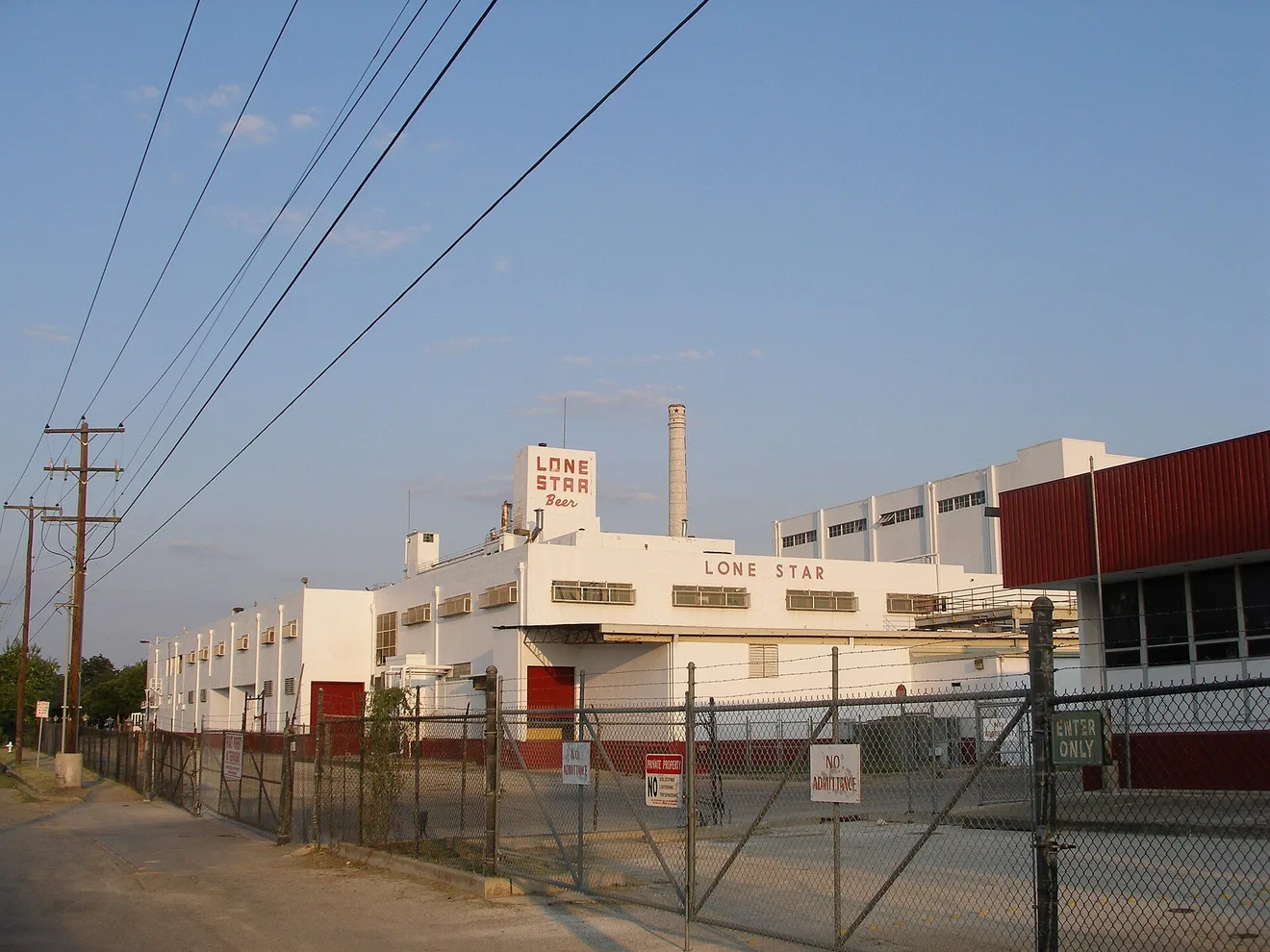
The developer behind the old Lone Star Brewery redevelopment in San Antonio has put a number on the public help it wants: more than $63.7 million to cover about $75 million in public space and infrastructure along the San Antonio River (via San Antonio Report). Southstar president and CEO Thad Rutherford made the case to the Westside Tax Increment Reinvestment Zone (TIRZ) board.
Southstar, a New Braunfels developer whose master-planned neighborhoods include Mission del Lago and VIDA on the South Side, bought the brewery site in January. It has been meeting with neighbors and community groups since.
The plan, as described to the board, is a full rebuild of a long-vacant industrial site in a mostly residential area south of downtown. It calls for new for-sale and rental housing, retail and restaurant space, music venues, new green space and trails, better streets and restoration of the brewery's landmark buildings. The Report describes the project as covering 57 acres; the brewery property itself is 32 acres at 600 Lone Star Blvd., according to earlier coverage by CultureMap San Antonio. Rutherford put the cost of a full-scale makeover of the 32-acre property at an estimated $575 million, the Report said.
"I see this as a citywide project," said Councilwoman Teri Castillo, who chairs the Westside TIRZ board. The site sits mostly in her District 5 and borders Districts 1, 2 and 3.
The site falls inside two tax increment zones, the Westside TIRZ and the Inner City TIRZ. A TIRZ sets aside the growth in property tax revenue inside its boundaries and can spend it on public improvements there. Southstar plans to ask the Inner City TIRZ for part of the money. It's also pursuing a municipal management district through the state, which would bring in another $20.7 million. That kind of district lets a commercial property owner issue bonds for things like parks, landscaping and sidewalks. The Report doesn't spell out how those pieces add up.
The Report didn't describe any vote yet. Each request needs an endorsement from its board before it goes to City Council for final approval.
Southstar is pitching the deal on future tax revenue. It projects the property's assessed value will climb from $24 million this year to nearly $729 million by 2050, producing more than $340 million in new tax revenue by then, including more than $97 million for the San Antonio Independent School District. Those are the developer's projections.
The city has been here before. In May 2021, City Council unanimously approved up to $24 million in incentives for an earlier plan by GrayStreet Partners and Midway, paid through the Inner City TIRZ and later city grants, to reimburse infrastructure and other work on the 32-acre site, the San Antonio Current reported at the time. That plan, which called for 1,282 housing units, stalled. CultureMap reported in January that at least five firms had tried and failed to redevelop the site, and that the old incentives don't automatically carry over to Southstar.
The first visible work is likely to be Lone Star Boulevard, the short two-lane road running from Probandt Street to Roosevelt Park that leads to the locked brewery gate. Rutherford said that work could start in early 2027, and Southstar is reviewing the plans with the city, the Report said.
Texas Public Radio reported in August that the road plans are fully engineered and that Southstar has committed to paying for the work while it negotiates reimbursement with the city. The road had $5 million set aside in the 2017 bond for widening, intersection work and bike and pedestrian improvements, but that money was moved elsewhere when the brewery went back on the market. The developer's renderings show the fencing coming down and sidewalks, landscaping and shade trees going in.
Why it matters for Contractors
Nothing here is ready to bid. The money hasn't been approved, and the full project will take years. But if it moves, it's a lot of work in one spot close to downtown: road reconstruction, utilities, river-side trails and parks, historic restoration on the brewhouse and other buildings, and a mix of for-sale and rental housing.
For a small shop, the realistic entry points are the trades and subcontract packages that come after the big contracts are let, plus specialty work like masonry and historic restoration. The Lone Star Boulevard rebuild is the piece with the nearest start date, so it's the one to watch first.
The steps to follow are public. Keep an eye on the Westside and Inner City TIRZ board agendas and City Council items for a vote on the funding request. Given the site's track record, it's fair to wait for that vote before planning around it.