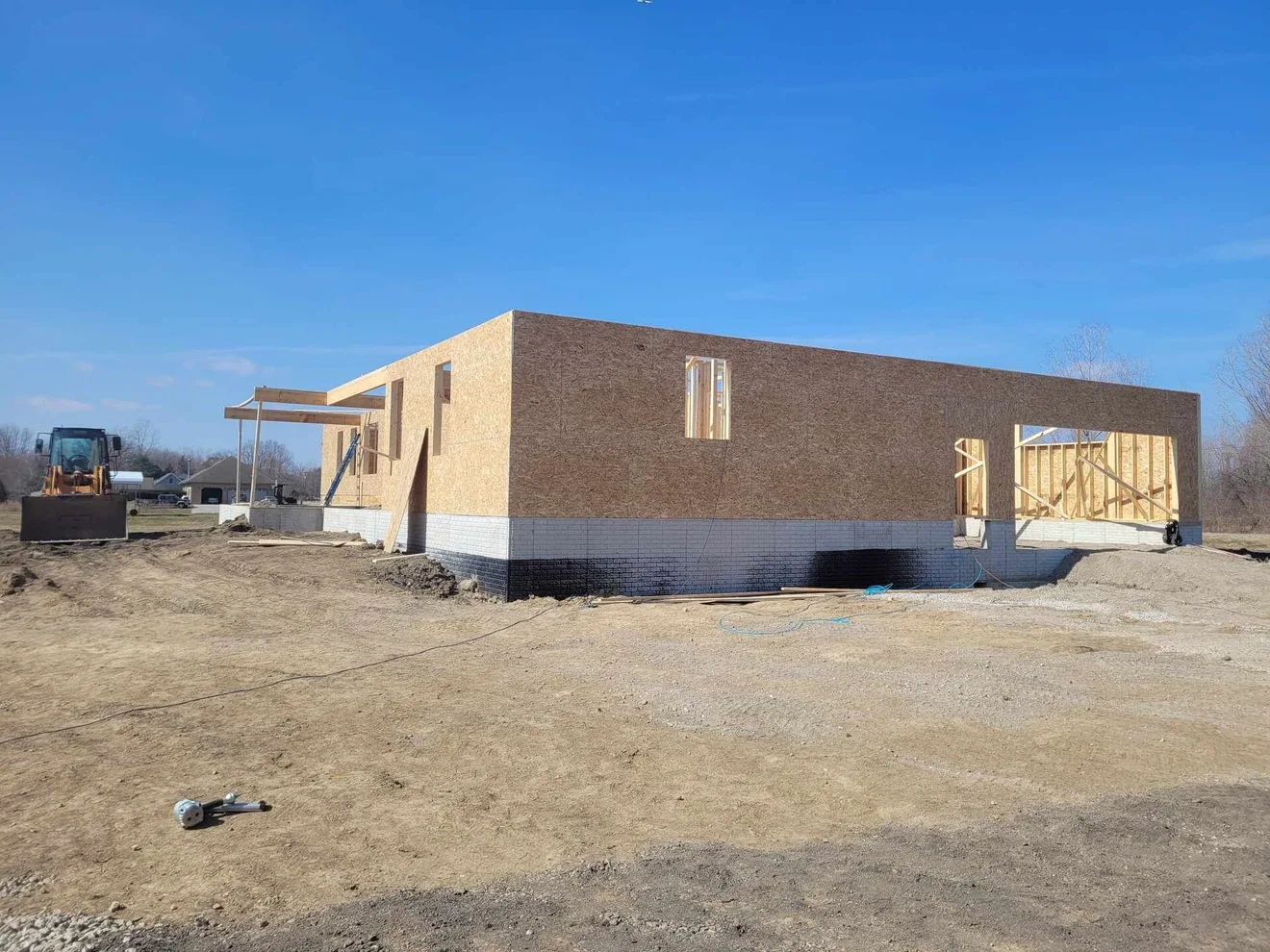
The Home Builders Association of Michigan has put out a guidebook called "Fair & Responsible Permit Fees," meant to help local officials, building departments, builders and homeowners judge whether a community's construction permit fees are reasonable and in line with state law (via WILX).
HBAM CEO Bob Filka talked it up on WILX's Studio 10 in Lansing. He pointed to rising material costs, labor shortages and local government fees as the things making new homes harder to afford. By his numbers, the median cost to build a new home in Mid Michigan is now above $430,000, and every $1,000 added to construction costs can push about 170 more local households out of the market.
HBAM's fees page uses a bigger, statewide number: 5,078 Michigan households priced out for every $1,000 increase in building costs, based on the National Association of Home Builders' 2026 method. The page also notes that high permit fees don't just hit new homes. They show up on renovations, additions and some repairs too.
The legal hook is short. Under the Stille-DeRossett-Hale Single State Construction Code Act, specifically MCL 125.1522, a city or township board has to set reasonable fees for permits, plan review, inspections, certificates of occupancy and appeals. Those fees are supposed to bear a reasonable relation to what the services actually cost, overhead included. The money can only be used to run the building department or the construction board of appeals, not to fill holes elsewhere in the budget.
HBAM leans on its long fight with the City of Troy to show what that means in practice. In 2019 the Michigan Supreme Court ruled that Troy broke the law by using building inspection fees to cover the department's past deficits, since fees aimed at an old shortfall don't reasonably track the cost of today's services. The same ruling found the statute doesn't give builders a right to money damages, though they can sue to stop current and future violations. HBAM's page also cites a 2024 Court of Appeals opinion in the case and the Supreme Court's 2025 decision not to take it up again, along with a Michigan Treasury guidance letter on how building departments should account for revenue, spending and overhead.
The page breaks its advice out by audience. Elected officials are urged to ask when the fee schedule was last reviewed, how each fee is calculated and whether revenue is running ahead of what the services cost. Building officials should be able to show their math: what costs went in, how shared expenses were split and whether the books line up. HBAM also links a permit fee checklist for building departments.
For builders, the advice is practical. Pull the community's published fee schedule, compare what you'd pay for similar projects there and in neighboring towns, write down what doesn't add up, and contact HBAM or your local home builders association. HBAM is also asking members to report fees they think are unlawful.
One more piece of Michigan law sits behind a lot of these arguments, even though HBAM's page doesn't cite it. In Bolt v. City of Lansing, decided in 1998, the state Supreme Court threw out a stormwater charge as a tax in disguise, according to a summary from the Michigan Municipal League. The court looked at whether a charge serves a regulatory purpose rather than raising revenue, whether it's proportionate to the cost of the service and whether people can choose how much of it they use.
Why it matters for Contractors
Permit fees are a real line item on a remodel or addition, and for a small shop they're often the cost you just pass along without a second look. This guide gives you a short list of questions to ask and the statute to point to when a fee seems out of line with the work the department does.
Be realistic about what you'll get. The Troy ruling says the construction code act itself doesn't hand out refunds, so the likely win is a lower or better-justified fee going forward. That's still worth it if you pull a lot of permits in one town.
The easiest first step costs nothing: compare your town's schedule with the next town over for the same job. If the gap is big, bring it to your local HBA before you bring it to a council meeting. A group with the numbers in hand tends to get a better hearing than one contractor with a complaint.