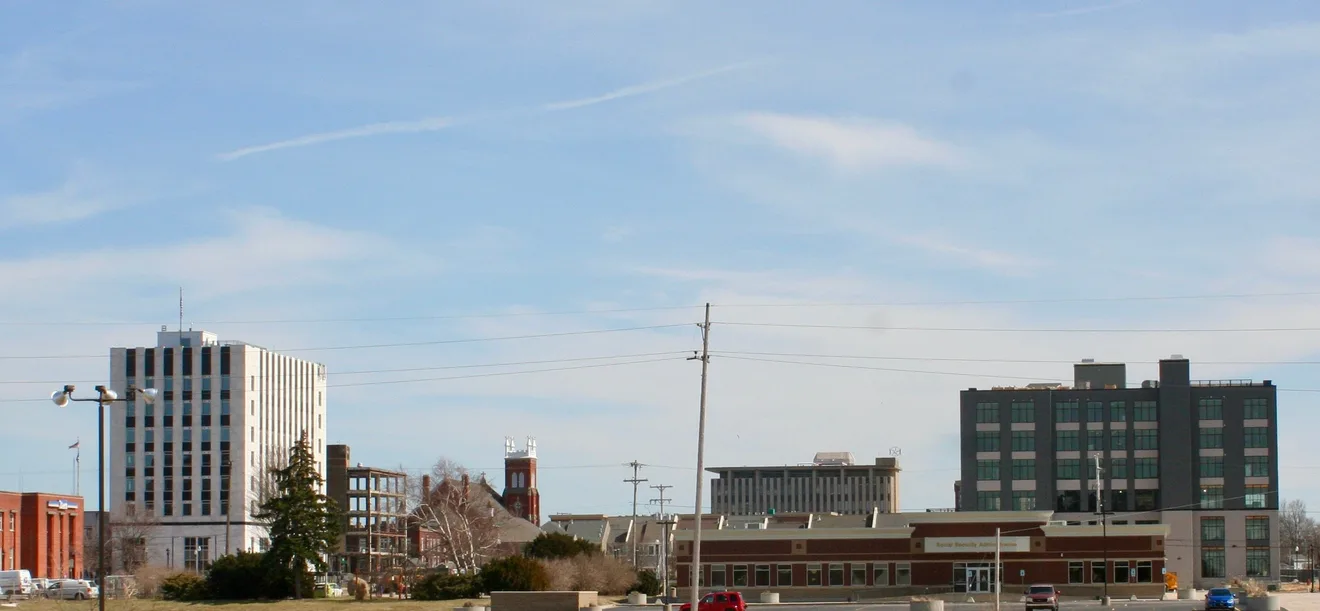
Muskegon has spent the better part of a decade turning city-owned vacant lots into new houses, and that work just earned a national award. The city's Infill Housing Program won the International City/County Management Association's 2026 Local Government Excellence Award for Community Sustainability in the 10,000-to-49,999 population category (via City of Muskegon).
City Manager Jonathan Seyferth, Deputy City Manager LeighAnn Mikesell and Development Services Director Jake Eckholm accepted the award at ICMA's annual conference in October, the city said in a Nov. 16 announcement. ICMA's list of 2026 winners, published in June, confirms the award and category.
The program builds new homes on publicly owned vacant lots. The city says it has produced hundreds of new for-sale and rental units at all price points across its neighborhoods, and ICMA called it a replicable model that reinvests redevelopment revenue.
That reinvestment piece is the clever part. Muskegon put hundreds of scattered vacant lots into a single brownfield plan, which lets the city capture new property taxes from the homes built on them. When private builders put up market-rate houses on some lots, the added tax value helps pay for homes the city builds and sells below market to low- and moderate-income buyers on others.
"All of those lots being in the same brownfield plan allows us to subsidize the houses that the city builds," Eckholm told FOX17 last year.
The numbers have grown steadily. Strong Towns reported in 2024 that 143 units were finished or under construction since 2019, with 61 more under contract, and that infill accounted for 60% of new housing construction in the city since 2018. By late 2025, the city said it had delivered more than 200 new homes since 2019. In September 2025, the City Commission approved an amended brownfield plan covering 565 eligible properties and planning for 613 new homes and 10 rehabs.
The city has played developer itself, too. In 2022, for example, the commission took up a $1.5 million construction agreement with LRS Enterprises to build six owner-occupied units on five lots on Leonard Avenue and Mulder Street.
Small builders are a big part of the picture now. Under a lot-sale policy the commission approved in October 2025, builders can buy city lots for 75% of their true cash value for a single-family home, or 50% per lot for a home with an ADU, a duplex or a small multiplex. The city reimburses 80% of the purchase price once the housing unit is finished. Water and sewer connection fees are waived for lots in an infill brownfield plan or for builders completing three or more units, and construction has to start within 18 months or the lot goes back to the city. Buyers need to be current on local taxes and show proof of financing, and sales go to the City Commission for approval.
Builders are using it. In March, the commission approved selling lots on Marquette Avenue, Scott Street and Ambrosia Street to Landmark Construction for $17,687.50 total, for six duplexes and six ADUs. In January, it approved workforce-housing payment-in-lieu-of-taxes agreements for duplex-and-ADU projects on Oak and Orchard avenues, with rents limited to households under 120% of area median income for 15 years.
Why it matters for Contractors
If you build in West Michigan, Muskegon is one of the few places where the city will sell you a buildable lot at a discount and pay most of it back when you finish. That cuts land cost, the piece of small-builder math that's hardest to control.
Start with the city's map of available residential lots on its website, then talk to Development Services before you make an offer; the planning office number is 231-724-6702. The lot policy gives its deepest discount to homes with an ADU, duplexes and small multiplexes, and recent deals show small builders using it.
The city posts bids and requests for proposals on BidNet, so if you'd rather build for the city than buy lots from it, watch there for future housing work.
And if you work somewhere else, take this to your own city hall. A big pile of vacant city-owned lots and a brownfield or housing tax-capture plan is a combination plenty of Michigan towns have. Muskegon's results are a ready-made pitch.