Boston's City Council voted Nov. 18 to pull minimum off-street parking requirements out of the zoning code for most new residential construction (via Boston City Council). The measure, Docket #0809, isn't law yet. It now goes to the Boston Zoning Commission, and nothing changes for permits until that board signs off.
Councilor Sharon Durkan filed the petition April 13, with Councilors Henry Santana and Liz Breadon as lead sponsors. It went to the Committee on Planning, Development and Transportation, which Durkan chairs, on April 15. The committee held a public hearing June 4 and a working session Nov. 16 that had no public comment period. On Wednesday the full council accepted the committee's report and passed the order in a new draft, according to the city's legislative record.
Right now, Boston's residential parking minimums run from 0.5 to 2 spaces per unit depending on the neighborhood, WBUR reported. The city has already dropped them Downtown and in neighborhoods that finished recent planning and rezoning work. Since 2021, they also haven't applied to projects where at least 60% of units are income-restricted at or below 100% of area median income.
As originally filed, the amendment sets required residential parking to "None" across the neighborhood zoning districts, from Roxbury and Dorchester to South Boston, Roslindale and Hyde Park. It also rewrites language so that any parking a builder does provide is no longer tied to a required count, and it flips the Fenway's parking table from minimums to maximums. Because the council passed a revised draft, some of those details may have shifted.
The vote wasn't close, but it wasn't quiet either. WBUR's account has nine councilors voting yes and four voting no: John FitzGerald, Ed Flynn, Erin Murphy and Brian Worrell. Several opponents offered amendments to exempt their own districts, and all of them failed. Boston 25 News reported six amendments went down, along with a motion to postpone the vote.
Three neighborhoods did get breathing room. Charlestown, East Boston and Mattapan, which recently went through neighborhood rezoning, are carved out for now. WBUR reported that minimums there wouldn't go away until at least Jan. 1, 2029.
"Today we have an opportunity to take a meaningful step toward addressing our housing shortage," Durkan said, according to Boston 25 News. Murphy, who voted no, argued that "for many residents, driving remains a necessity, not a luxury." FitzGerald called it "a very fragile ecosystem of parking in a lot of these residential neighborhoods."
Supporters lean hard on cost. According to the city, a single garage space can cost up to $50,000 to build into a project, WBUR reported. The petition itself cites a Metropolitan Area Planning Council study finding roughly one-third of residential parking spaces in the Boston area sit empty overnight, and it argues that parking mandates can make smaller "missing middle" projects impossible to finance. Next door, Cambridge repealed its off-street parking requirements for new buildings in October 2022, and Somerville followed in December 2024.
Mayor Michelle Wu's administration hasn't embraced the change yet. A city spokesperson told WBUR, "We will evaluate the implications of eliminating parking minimums citywide." No Zoning Commission date had been posted as of this writing.
Why it matters for Contractors
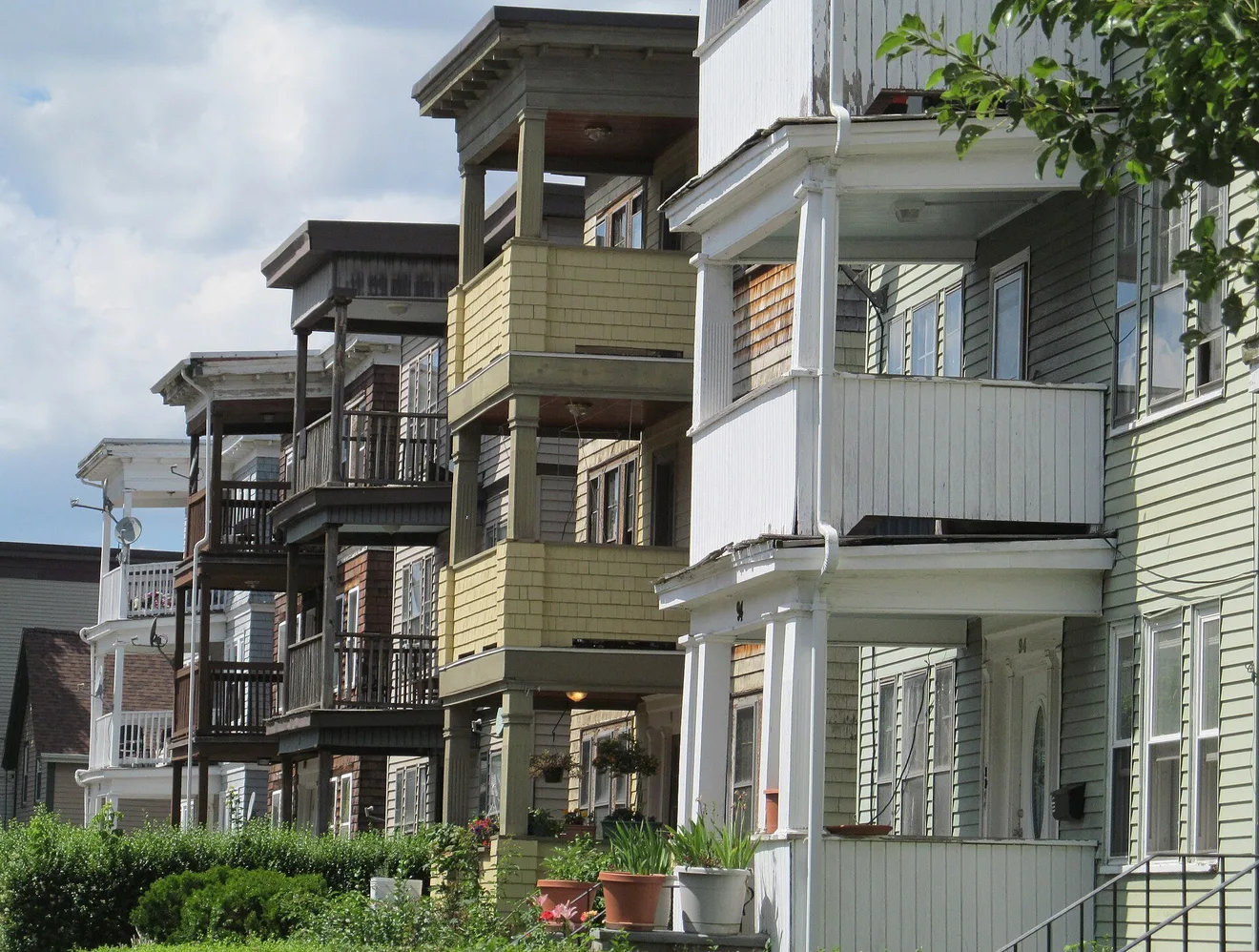
If you build or renovate small multifamily in Boston, parking is often the thing that decides whether a lot pencils out. Big projects already go through Article 80 review with parking caps, but smaller jobs don't, so a triple-decker or a four-unit infill can still be on the hook for spaces it has no room for. Take the minimum away and parking becomes a design and market call between you, your client and the lender, not a zoning requirement.
Don't redraw anything yet. The Zoning Commission still has to act, the final draft may differ from what was filed in April, and Charlestown, East Boston and Mattapan stay on today's rules for a while longer. For now, keep an eye on the Zoning Commission's agenda, and if you're pricing a small residential job in one of the affected neighborhoods, it's worth sketching a no-parking version so you're ready if the rule changes.