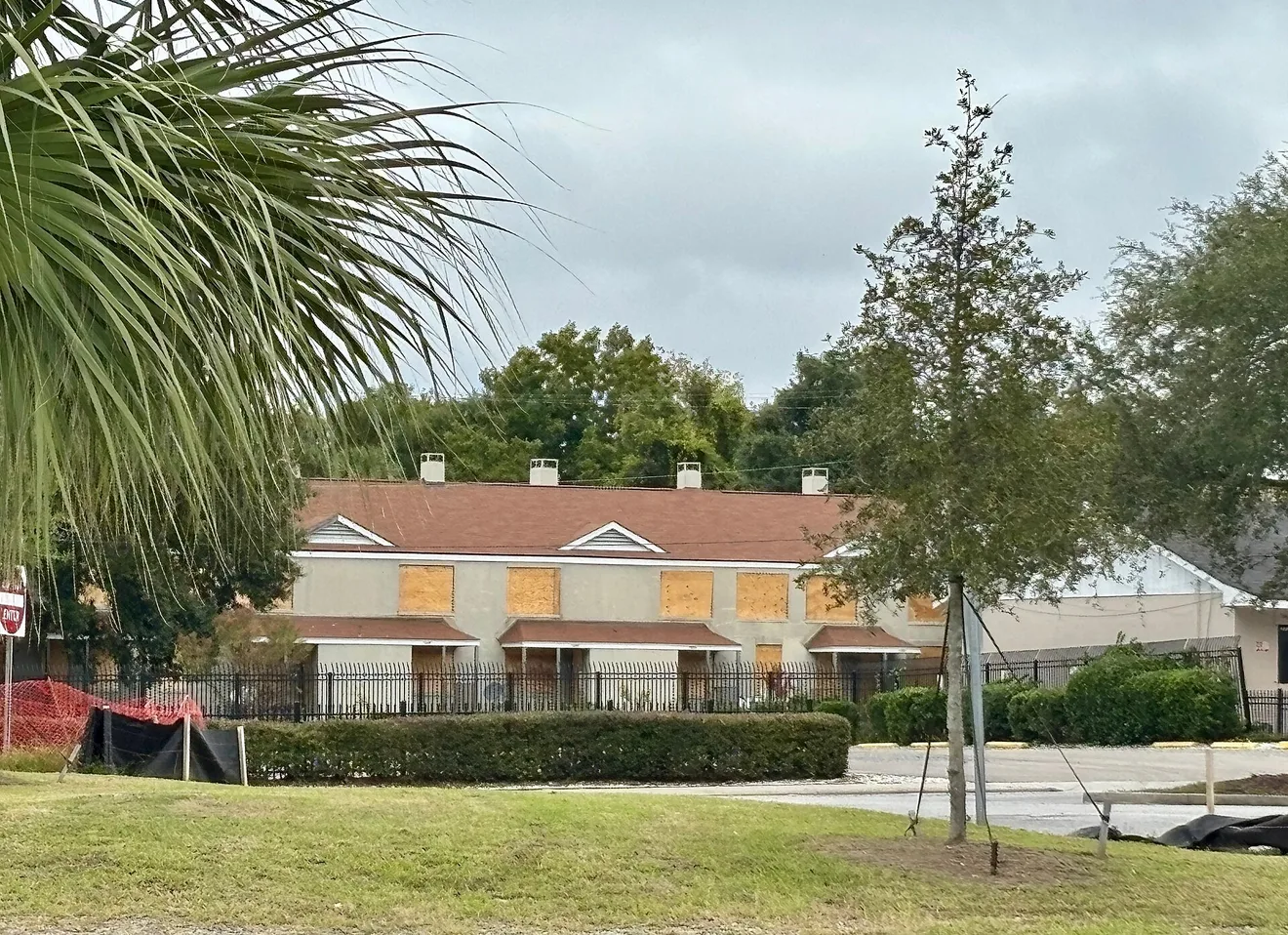
The Housing Authority of Savannah and the Yamacraw Village Residents Council have reached an agreement on terms for tearing down and rebuilding the 1940s public housing complex, ending a long standoff over what residents get out of the deal (via The Current GA). They announced it in a joint release on Thursday, Oct. 29.
The headline number is 100. The housing authority committed to building at least 100 income-based units on the redeveloped site, and WSAV reported those units will be HUD-subsidized. Residents who still live at Yamacraw get a right to return once the new buildings are done, as long as they still meet HUD and housing authority eligibility rules at that point.
Every household will have to move out first. The authority said it will pay moving expenses, security and utility deposits and transportation, and each household will be assigned a relocation specialist. The release didn't say where families will go or when they'll have to leave. Once rebuilding starts, the residents council will get progress updates every six months and will track the authority's work.
"Our focus has been on making sure that our families that call Yamacraw home get a chance to come back to a safe place to live," Shana M. Williams, the residents council's treasurer, said in the release.
Getting those promises in writing was the fight. Residents had pushed for protections they could enforce, including the 100-unit commitment, and the housing authority said in May that its 100-unit commitment had already been formally submitted to HUD. Advocates weren't satisfied. "At this point, the housing authority could change their mind in a month, in a year," David Hamburger of Georgia Legal Services Program told WSAV in May, after protesters disrupted an authority board meeting and it was adjourned early.
The rebuild itself still hinges on Washington. The authority first submitted its demolition application to HUD on Aug. 19, 2025. At its Aug. 12, 2026, meeting, the authority's board unanimously passed a resolution reaffirming its support for the request, which covers 315 dwelling units and one non-dwelling building, and the minutes say HUD approval was still pending. Coverage of Thursday's announcement didn't report a HUD decision.
The City of Savannah, which handles the federal environmental review for the project, has already finished its part. According to the city's Yamacraw Village page, the site covers about 21.63 acres with 42 two-story apartment buildings dating to 1940 and an office building from 1938. The city reached a finding of no significant impact for demolition, with required mitigation covering lead-based paint and asbestos, flood insurance, floodplain management, endangered species and a historic preservation agreement under Section 106. The city puts the demolition project's estimated cost at about $4.6 million, with the authority asking HUD to release capital funds to cover it.
The case for tearing it down came down to money. A 2019 capital needs assessment put needed improvements at $40 million, and a 2023 report raised that to $51 million, according to The Current. The authority's board voted in June 2020 to pursue demolition, calling a rebuild more cost-effective than a renovation.
What will go up in its place is still an open question. The city's page says there are no redevelopment plans at present and that any future redevelopment will need its own environmental review. The housing authority has an open solicitation, RFQ No. 02272026, for a master developer for Yamacraw Village. The August minutes say an evaluation committee visited properties built by shortlisted firms in June, but no developer has been named.
The release didn't give a total unit count for the new project; the 100 income-based units are a floor. WTOC reported in March that 90 families still lived at Yamacraw.
Why it matters for Contractors
There's nothing to bid on today, and there won't be until HUD rules on demolition. But this agreement clears one of the biggest local obstacles, and a 21-acre public housing teardown and rebuild is a multi-year pipeline of work once it moves.
Demolition comes first, and the city's environmental review already spells out what it will involve: lead paint and asbestos abatement and historic preservation conditions on buildings dating to 1940. Abatement and demo outfits in the Savannah area should watch the housing authority's procurement page, where demolition and related solicitations would be posted.
For everyone else, the name to wait for is the master developer. That firm will shape the site plan, the unit count and how the building work gets packaged. Once it's named, small subs and specialty trades will want to learn who its general contractor is and how it lines up subcontractors, and getting on those lists early is the realistic way into a job this size.