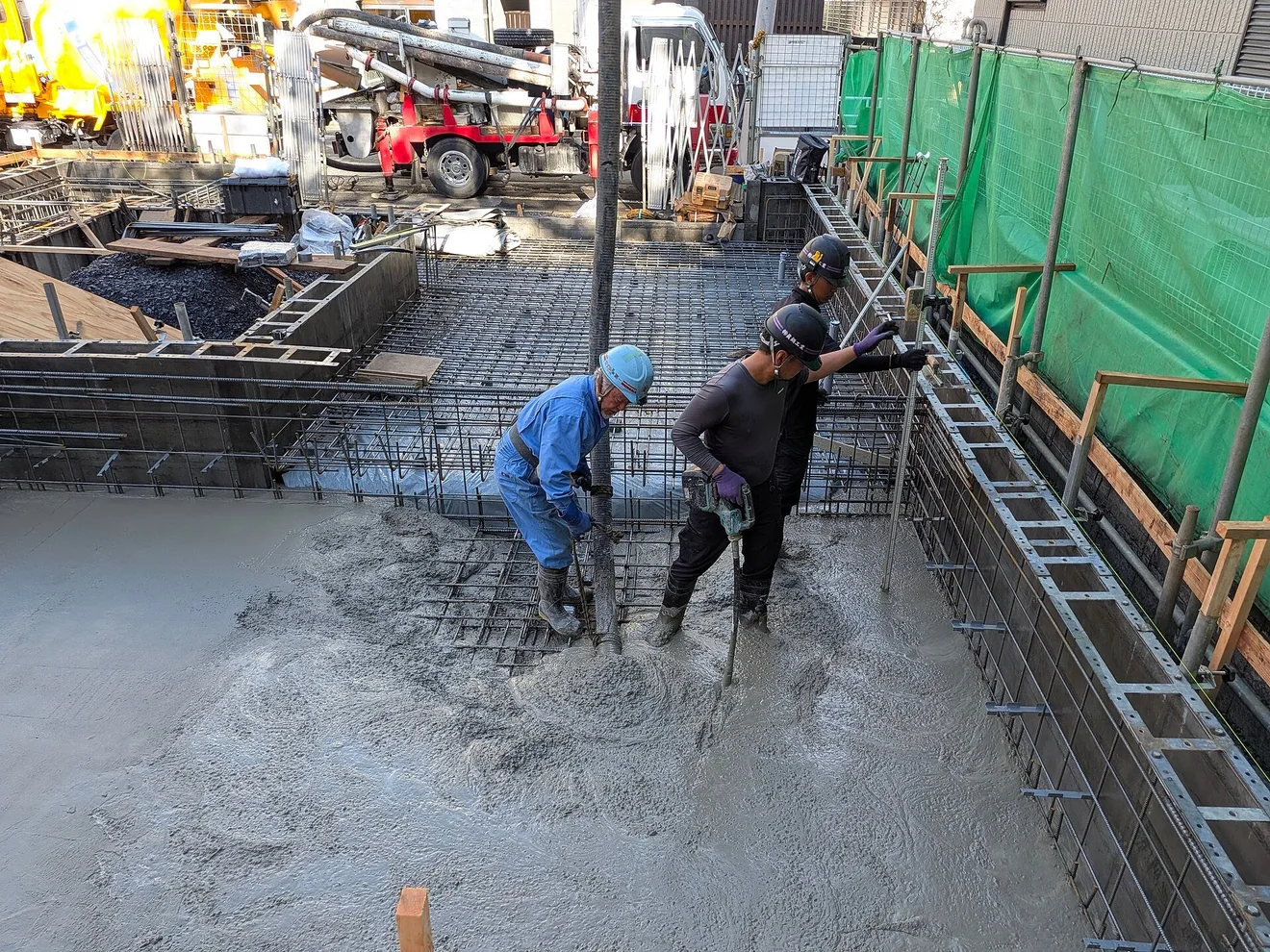
A New Jersey concrete contractor and its two owners are on the hook for $2.2 million after federal investigators found they paid workers in cash at their regular hourly rate, even for hours past 40 in a week (via U.S. Department of Labor).
A consent judgment was entered Nov. 16, 2026, in the U.S. District Court for the District of New Jersey, the Labor Department said in a Nov. 18 announcement. It resolves the department's lawsuit against Premier Concrete Systems LLC and owners Peter Tiflinsky and Antonio Escada. The suit alleged the company broke the overtime and recordkeeping provisions of the Fair Labor Standards Act.
Here's how the money breaks down. The company owes $1,040,648 in back wages to 323 workers, plus the same amount again in liquidated damages. On top of that is a $118,704 civil penalty. Together that comes to $2.2 million. The judgment also bars the company and its owners from violating the FLSA in the future.
The violation itself is simple. According to the department, a Wage and Hour Division investigation found Premier paid employees cash at straight-time rates for every hour they worked. Nobody got time and a half once they crossed 40 hours in a workweek.
The release doesn't take issue with cash as a payment method. The problem it describes is the missing overtime premium, along with the recordkeeping side of the case. Under the Labor Department's overtime rules, covered workers must get at least 1.5 times their regular rate for hours over 40 in a workweek. The department's overtime fact sheet defines a workweek as a fixed, recurring stretch of 168 hours, and it says hours can't be averaged over two or more weeks. A 50-hour week followed by a 30-hour week still means 10 hours of overtime.
"Construction workers play a critical role across the country in ensuring safe and reliable structures," said James Cain, the Wage and Hour Division's regional administrator in Philadelphia. He added that the division is committed to making sure construction workers are paid according to federal labor law.
Jeffrey S. Rogoff, the Regional Solicitor of Labor in New York City, called the outcome "a clear reminder for employers in the construction industry" to keep their legal responsibilities in mind.
This isn't the only recent New Jersey construction case. In October, the department announced a separate consent judgment against P & B Partitions Inc., a drywall installer in Voorhees. That company was ordered to pay $350,000 in back wages, $350,000 in liquidated damages and $25,000 in civil penalties after investigators found 48 workers weren't paid for pre-shift time spent waiting for rides to jobsites.
State regulators are active too. In 2025 the New Jersey Department of Labor and Workforce Development issued a stop-work order against a Union-based concrete subcontractor on a Princeton foundation job. The state cited incomplete records of workers' daily and weekly hours, earned sick leave problems and misclassification of workers.
Why it matters for Contractors
The math is the lesson here. In this case the liquidated damages matched the back wages dollar for dollar, so every dollar of overtime that went unpaid ended up costing two, before the civil penalty. For a small concrete, framing or finish crew that runs long weeks in season, unpaid overtime adds up fast across a whole crew.
If you pay anyone hourly, cash or check, track their hours by workweek and pay time and a half past 40. Don't average a long week against a short one, and keep the time records. The P & B case is a reminder that time spent waiting on a ride to the job can count, too.
If you think you've gotten this wrong, the Labor Department's PAID program lets eligible employers audit their own pay practices, report problems and pay the back wages owed under the agency's supervision. It isn't available once you're under investigation or in litigation over the same practices, so it's for fixing things early. Questions can also go to the Wage and Hour Division's helpline at 866-4US-WAGE (487-9243).