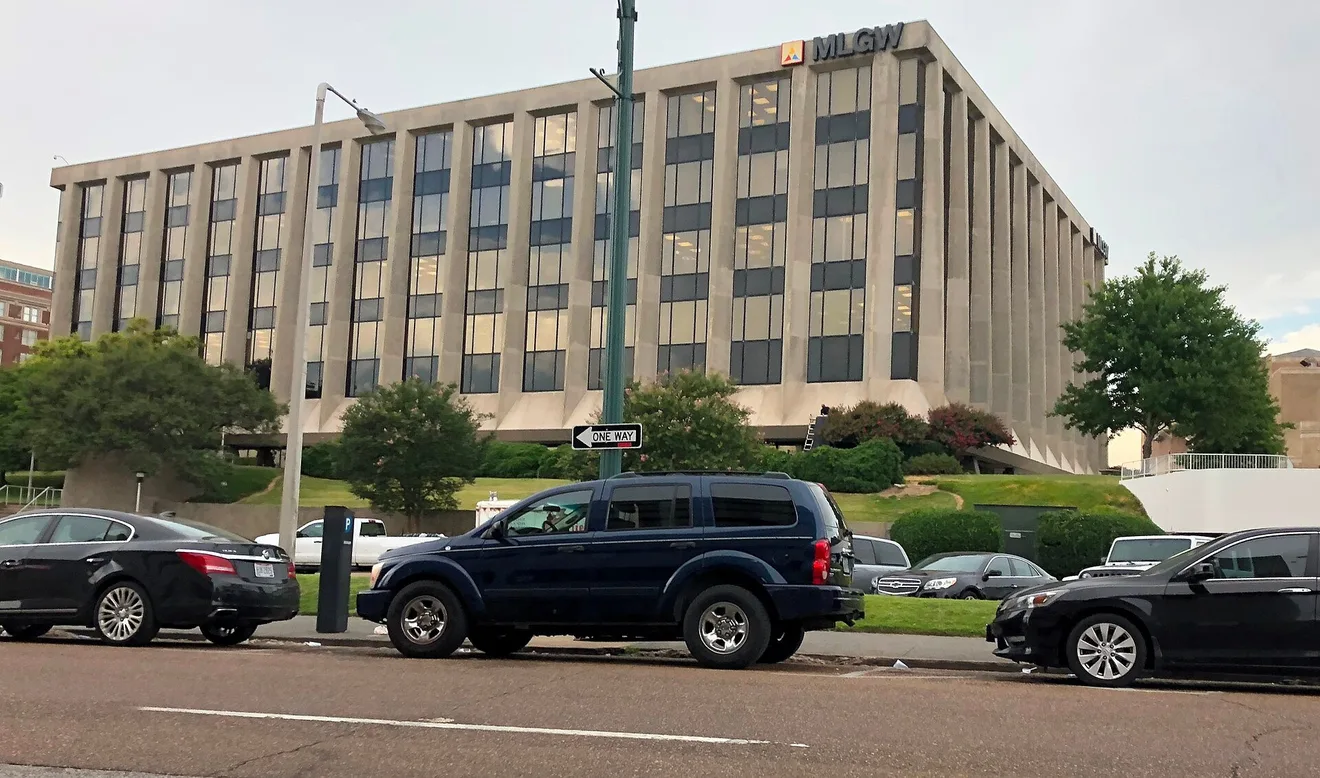
If you've ever priced out a new house on a vacant Memphis lot and watched the electric hookup eat your margin, MLGW has a new program aimed squarely at you. Memphis Light, Gas and Water's Residential Builder Rebate pays builders back up to $7,500 per single-family home and up to $1,500 per multifamily unit for the electric infrastructure it takes to connect new housing in targeted neighborhoods (via Tri-State Defender).
The money comes from a $1 million investment by the Tennessee Valley Authority, run through MLGW. City, utility and TVA officials rolled it out Nov. 12 at a Bee Development job site on North Manassas Street in North Memphis.
Here's the problem it's trying to fix. On a lot that's sat empty for years, the transformer or the line from the pole to the meter may be long gone, and the builder ends up paying to put it back. John Lawrence, MLGW's director of economic and business development, said that kind of work adds both cost and schedule risk, according to the Defender. The rebate covers eligible equipment and labor to connect a home to the grid, such as a transformer or the service line from pole to meter.
Mayor Paul Young framed it as a numbers issue for builders working in neighborhoods where appraisals lag. "It's a math problem when you invest $200,000 to build a thing, but then it comes back and appraises for $150,000," he said. The city's goal is 10,000 new or rehabbed housing units by 2030.
Where it applies. MLGW's program flyer lists "strategic areas like Uptown, Binghampton, Klondike and South Memphis/Soulsville." The Defender's report also names the Cleveland Corridor and parts of Downtown. Either way, the site has to be confirmed as eligible in writing by the Downtown Memphis Commission, the Community Redevelopment Agency or the city's Division of Housing and Community Development. That confirmation is a required attachment on MLGW's application.
What you have to build. Every home has to meet MLGW's EcoBUILD energy-efficiency standard. That means two on-site MLGW inspections: one before drywall to check insulation and air sealing, and one at completion to test the heating and cooling system for leaks. The Defender reports EcoBUILD homes also call for high-efficiency HVAC, tight ductwork, low-VOC and recycled materials and native-plant landscaping. The rebate is paid after the qualifying work is done, the inspections are passed and the EcoBUILD requirements are met.
How to apply. MLGW wants builders to reach out before construction starts to confirm the site qualifies and money is still available. The application asks for the project address or parcel ID, your MLGW work order number, lot and unit counts, square footage range, the property owner of record and your estimated "need date" for utility installation and energizing. You'll also need proof that you control the site. Applications go to MLGW Energy Services at energyservices@mlgw.org, and the office's number on the form is (901) 528-4188. Funding is limited and handed out first-come, first-served.
Bee Development's Evaniel Johnson III, a former student at the old Humes Middle School across the street from his North Manassas build, said he picked blighted lots because nobody else wanted them. "You cannot change a neighborhood if you don't start in the core," he said.
Why it matters for Contractors
For a small builder doing one or two infill houses at a time, $7,500 can be the difference between a lot that pencils and one you walk away from. It won't fix an appraisal gap on its own, but it takes a chunk of the most unpredictable cost off the table.
A few practical points. Call MLGW before you break ground, not after, because the money is limited and the order you apply in matters. Get the eligibility letter from the DMC, CRA or the city's housing division lined up early, since you can't apply without it. And price EcoBUILD into your bid from the start. If you don't normally build to a tested energy standard, schedule your insulation and air sealing so they're done and visible before that pre-drywall inspection.
MLGW's materials don't list a program end date or a cap per builder, so ask about both when you call. With $1 million in the pot, that works out to roughly 133 single-family homes at the full $7,500, so it won't last forever.