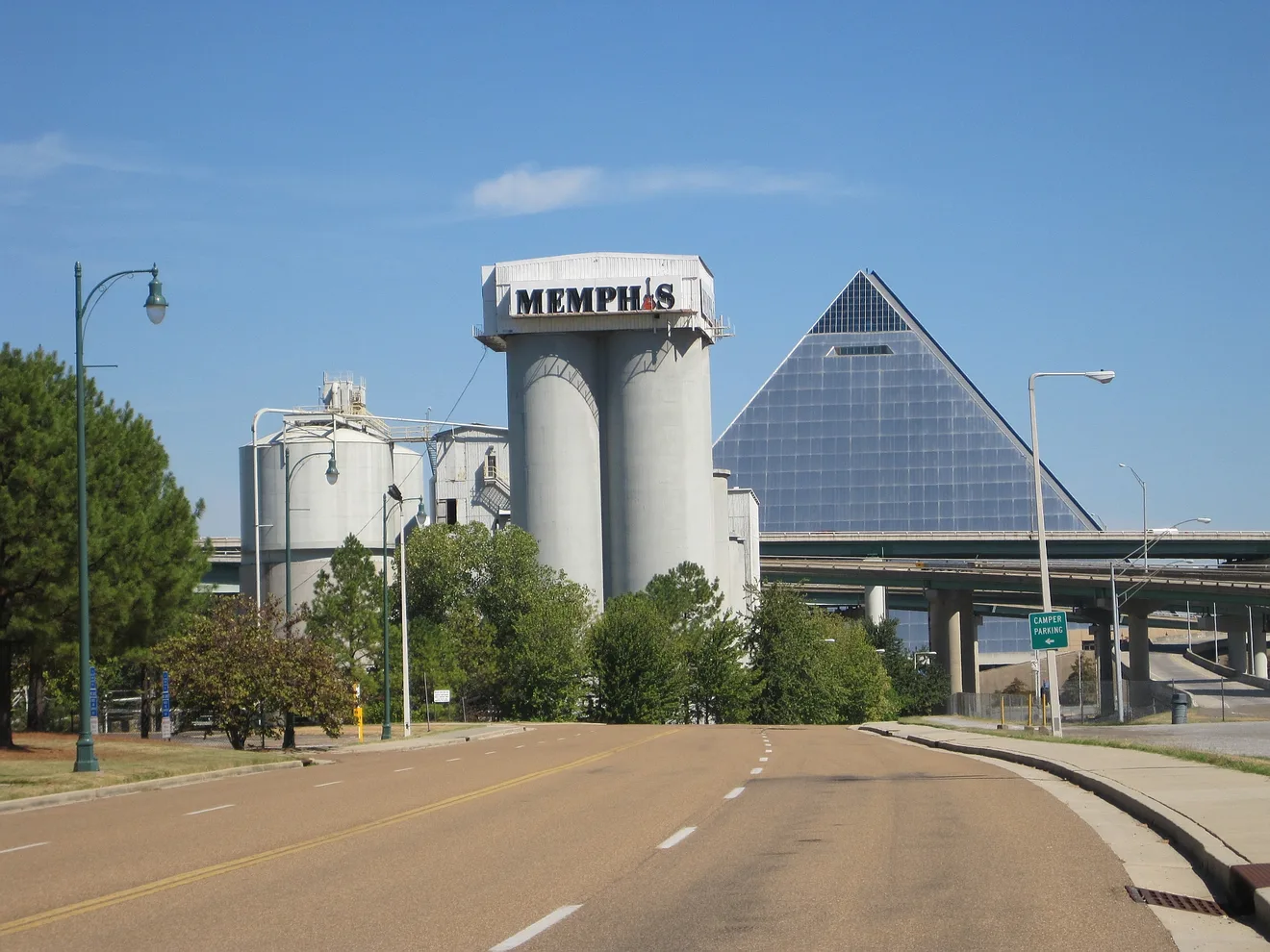
Amrize is sinking about $16 million into its cement terminal on the Memphis riverfront, adding storage, a second truck loading bay and a product the local market hasn't had on hand: Grade 100 slag cement (via Amrize).
The company laid out the plans at an open house Nov. 16 at the terminal on Channel Avenue, along the Mississippi River, with Memphis Mayor Paul Young, local officials and customers in attendance, FOX13 Memphis reported. The dollar figure came from Young; Amrize hasn't released a cost breakdown. Completion is targeted for summer 2027.
Here's what's going in. A new elevated silo will hold 4,000 tons. A second automated, self-service loading bay is meant to get trucks in and out faster, according to the company. Amrize also plans better barge access off the river, and FOX13 reported the work includes shoreline repairs and stabilization near the unloading dock to deal with erosion, plus a dust collection system dedicated to the new slag silo.
The cement itself comes downriver from Amrize's plant in Ste. Genevieve, Missouri, which the company bills as North America's largest. Amrize said in December 2025 that an expansion there added 660,000 short tons of yearly capacity, for a total of 5.5 million short tons. From Memphis, that product moves out to West Tennessee, eastern Arkansas and northern Mississippi.
The slag piece is the part most likely to show up in local mix designs. Slag cement is ground granulated blast-furnace slag, sold under the ASTM C989 standard in grades 80, 100 and 120. The grade reflects how mortar made with it stacks up in strength against plain-cement mortar; Grade 100 has to average at least 95% of the reference strength at 28 days, according to a technical bulletin from admixture maker GCP Applied Technologies. Ready-mix producers can blend it in at the plant and adjust the proportion job by job, and the same bulletin notes replacement rates as high as 65% have been reported.
Amrize pitches the material as a lower-carbon option for concrete in some applications, and told FOX13 that Memphis doesn't currently have a local slag cement supplier.
The terminal isn't new. Amrize says it has been supplying Tri-State jobs for more than 40 years, and the company points to the airport expansion work tied to FedEx, the St. Jude Children's Research Hospital expansion and The Guest House at Graceland as projects it fed.
Young tied the investment to housing. "We have a charge of getting 10,000 housing units built in the heart of our city," he said, according to FOX13, noting those units will need foundations. That goal is real and it's behind schedule: a City of Memphis housing presentation from June shows 2,421 units completed from January 2024 through March 2026, a pace that would put the city at roughly 6,500 by the 2030 deadline. Shelby County Commissioner Mickell Lowery also spoke, saying new projects like this support construction work and the local economy.
Patrick Cleary, Amrize's chief commercial officer for cement, said the investment "reflects Amrize's commitment to be the local partner of choice." The company hasn't said how many construction or permanent jobs the project will create.
Why it matters for Contractors
Most small contractors in the Memphis area don't buy cement by the ton from a terminal. You buy yards of concrete from a ready-mix supplier, and that supplier buys from places like this. So the payoff here is indirect: more storage and a second loading bay should mean fewer delays at the source when demand spikes, which is when your pour dates usually get bumped.
The slag cement is worth a conversation with your ready-mix rep, but not until it's actually available, which won't be before summer 2027. If you pour foundations, slabs or flatwork, ask whether they plan to offer slag blends, what it does to price, and whether it changes anything about how the mix handles on your jobs. Don't assume; get it from the supplier.
The bigger picture is demand. The city wants 10,000 new homes by 2030 and is running behind, and every one of those needs concrete. If that push gains speed, local supply getting deeper is good news for anyone doing residential work in West Tennessee, eastern Arkansas or north Mississippi.