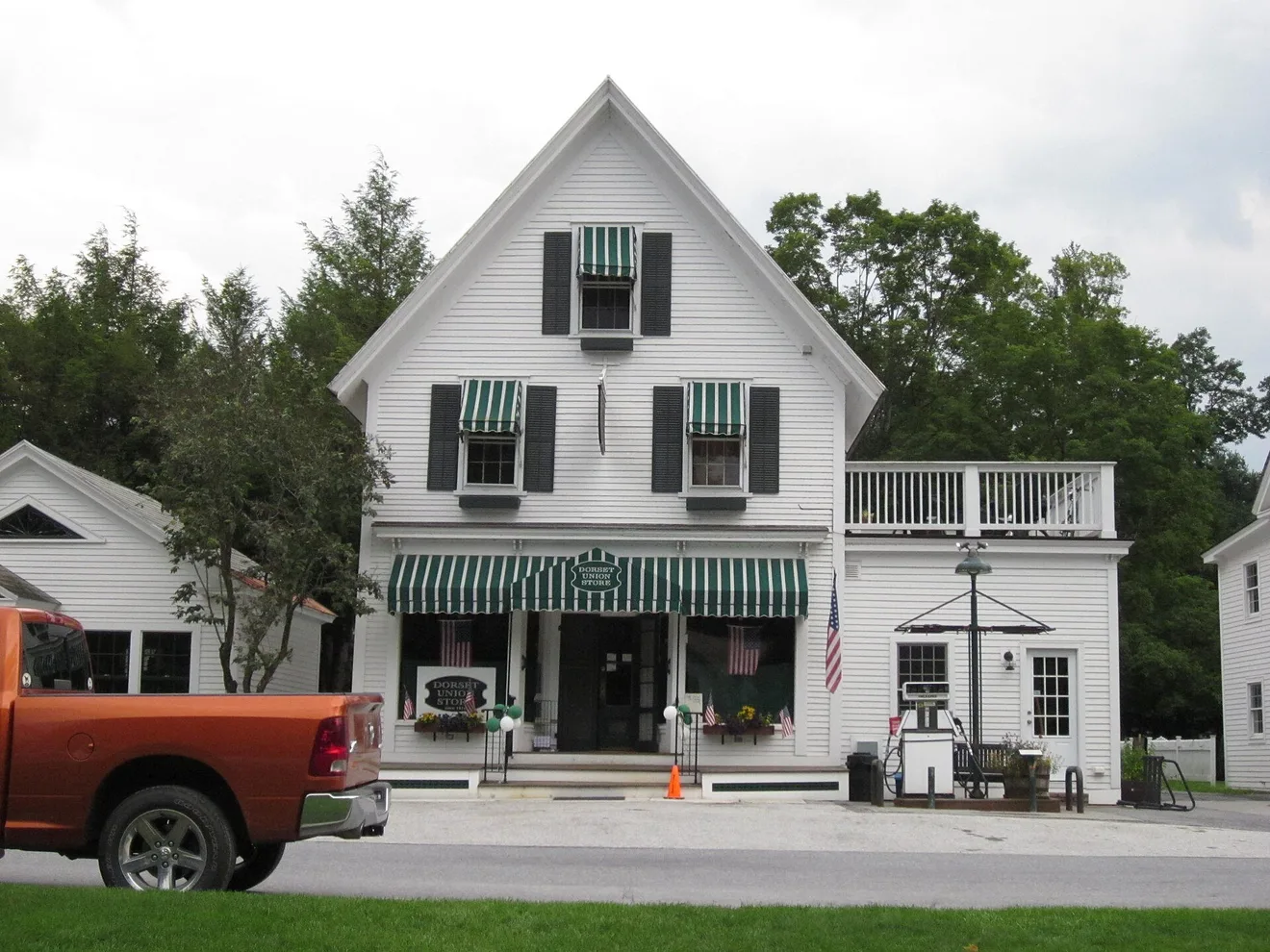
Voters in Dorset, the affluent Bennington County town of just over 2,000 people, go to the polls Tuesday, Nov. 3, to decide whether the town can hand over part of its Raptor Lane property for a small housing development (via VTDigger).
The question on the town's sample ballot asks whether voters will authorize conveying up to 30 acres of the 308-acre town-owned parcel "to support the development of up to 35 units of housing." Town manager Rob Gaiotti told VTDigger and Vermont Public that a yes vote would let the select board start talking with developers "a little more in earnest." A no vote would send the town back to rethink its housing plans for the site altogether.
Dorset bought the land off Route 30, just north of the JK Adams Company, through a bargain sale in 2018, according to the town's Raptor Lane page. Since then it has been used for nearly 10 miles of mountain bike trails built with Northshire Area Trail Systems, and the town moved its municipal offices there. Housing became the focus in 2025.
This is the town's second run at it. A 2025 request for proposals drew one full response, from Rutland-based S.M. Graves. A review memo prepared for Gaiotti by consultants White + Burke lays out what that team proposed: about 120 units across single-family homes, duplexes, quads, townhomes and 2.5-story apartment buildings, built in phases over roughly a decade. Proposed for-sale prices ran from about $450,000 for a two-bedroom townhome to $750,000 for a three-bedroom single-family home, and the team asked the town for $2.225 million.
Many residents balked at the scale, and the town tabled the plan. The same memo flagged the bigger problem for anyone building there: water, wastewater and stormwater costs are the main limit on how dense the project can be and whether it pencils. The Integrated Vermont Housing Initiative declined to bid at all, citing the size of the project and the priority of the Dorset Village water system.
Since then the plan has shrunk. Concepts that Vermont Integrated Architecture presented to the town this summer studied about 28 to 31 acres and sketched three layouts ranging from 37 to 58 units, mixing cottages of 900 to 1,200 square feet with duplexes, townhomes and small apartment buildings. The ballot caps the project at 35 units, fewer than any of those sketches.
The smaller scale is part of why officials now hope to land a nonprofit homebuilder. Private developers have a hard time making workforce housing work at this size, according to the VTDigger report. Gaiotti also floated selling individual lots for single-family homes as a possible alternative.
The need is well documented. A housing market analysis that CommunityScale completed for the town in May puts the typical Dorset home at about $709,000, while a typical local teacher's salary supports a purchase of roughly $245,000. The study counts 292 households earning less than 60% of area median income, but only 16 income-restricted units in town.
Opposition is organized. Friends of Dorset, led in part by Steven Zoric, wants the land next to the town forest left as green space. "We want to keep this as a pristine resource that the town has," Zoric told Vermont Public. Critics also say voters should know more about future plans and costs before they sign off.
Ben Weiss, a retired software developer who has lived in Dorset for more than 30 years and served on committees studying the site, sees the vote as a rare opening. He worries a no vote would make developers reluctant to come back, and said some opponents have softened as the project has gotten smaller.
Why it matters for Contractors
A yes vote doesn't put a shovel in the ground. It starts a developer search, and construction work would flow later through whoever the town picks to build it. A 35-unit mix of cottages, duplexes and townhomes in the 850- to 1,200-square-foot range is the kind of job a regional builder or a group of local trade contractors can handle, unlike a 120-unit phased build that tends to go to larger firms.
The catch is site work. The town's own consultants named water, wastewater and stormwater as the biggest cost drivers, so excavation, septic and utility contractors may see the earliest opportunities. If you work in the Manchester and Dorset area, Tuesday's result tells you whether this one is worth tracking.