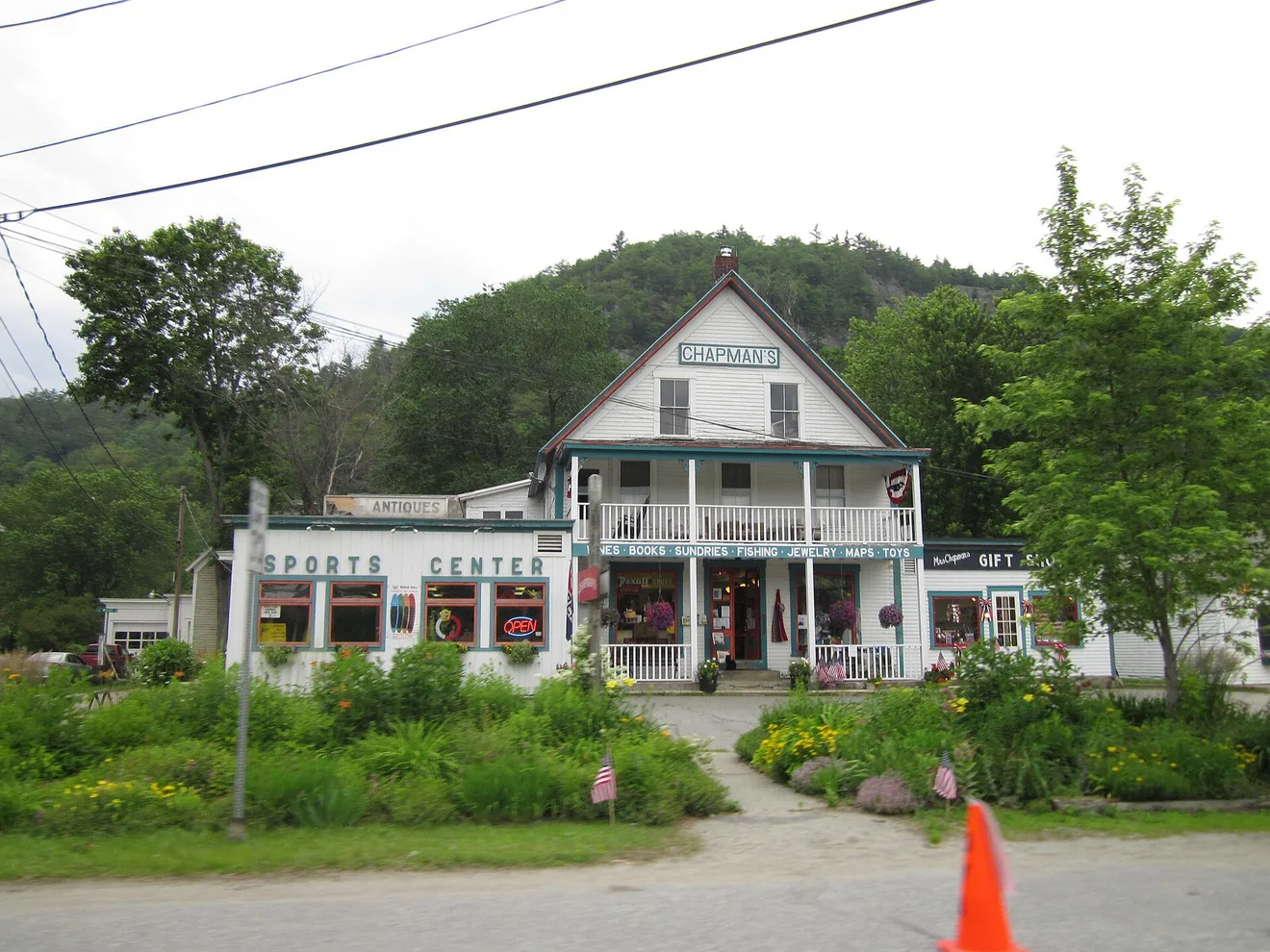
In Fairlee, a small group of local business owners wants to put up two three-story buildings in the town center with 22 market-rate apartments and four commercial spaces. What's holding up the project, known as the Denison, isn't the buildings. It's the septic system, and whether the town will let the developers use a new state financing tool to pay for it (via VTDigger, republished from the Valley News).
The developer is Appleseed Development, formed by Jonah Richard, who founded Village Ventures; Barrett Brown and Travis Noyes, co-owners of Chapman's General Store; and Deecie Denison. The selectboard approved the project last fall, according to the story.
The problem is wastewater. The site doesn't have the septic capacity for a project this size, so the team needs a new system behind Chapman's General Store. To pay for it, the developers want about $550,000 through Vermont's Community and Housing Infrastructure Program, or CHIP. VTDigger reported that figure is under 10% of the project's estimated cost of about $6 million.
CHIP isn't a grant. It's tax increment financing for housing infrastructure. Under the state's CHIP guidelines, a town designates a housing development site, adopts a plan after a public hearing, signs an agreement with the developer, and then needs approval from the Vermont Economic Progress Council. The new property tax revenue the project creates goes toward paying off the infrastructure debt for up to 20 years. Water, wastewater and stormwater systems are all eligible, along with roads, sidewalks, site prep and soft costs like engineering. For market-rate projects, the state requires a "but for" showing that the job couldn't happen without the help.
In Fairlee's case, VTDigger said the town would keep the site's current tax value, about $3,000 a year, plus up to 15% of the new municipal tax, while the rest repays the loan. The developers estimate the finished project would pay about $79,000 a year in property taxes.
Not everyone in town is sold. Neighbors who oppose the project have raised questions about police coverage in a town with one officer, whether the fire department's ladder truck can reach a third floor, pet waste on the town common, growth, and what CHIP would do to town revenue. Some residents back the project, though the story said they've been quieter.
The selectboard has promised a townwide vote on whether Fairlee can use CHIP at all, while selectboard member Peter Berger wants the board to decide instead, as Burlington and Middlebury did. No vote date was given. Until the town settles it, the developers say they can't start construction or line up investors.
Why it matters for Contractors
This is a small-builder story at heart: local owners, a 22-unit job, and a deal that hinges on one piece of infrastructure. Septic and wastewater capacity is the quiet project-killer in a lot of small Vermont towns, and CHIP is one of the few tools that can cover it.
If you're a Vermont builder looking at infill in a village center, learn how CHIP works now. It takes a town plan, a public hearing, a developer agreement and state approval, so local politics are part of the schedule. Build that time into your pro forma, and line up community support before the vote, not after.