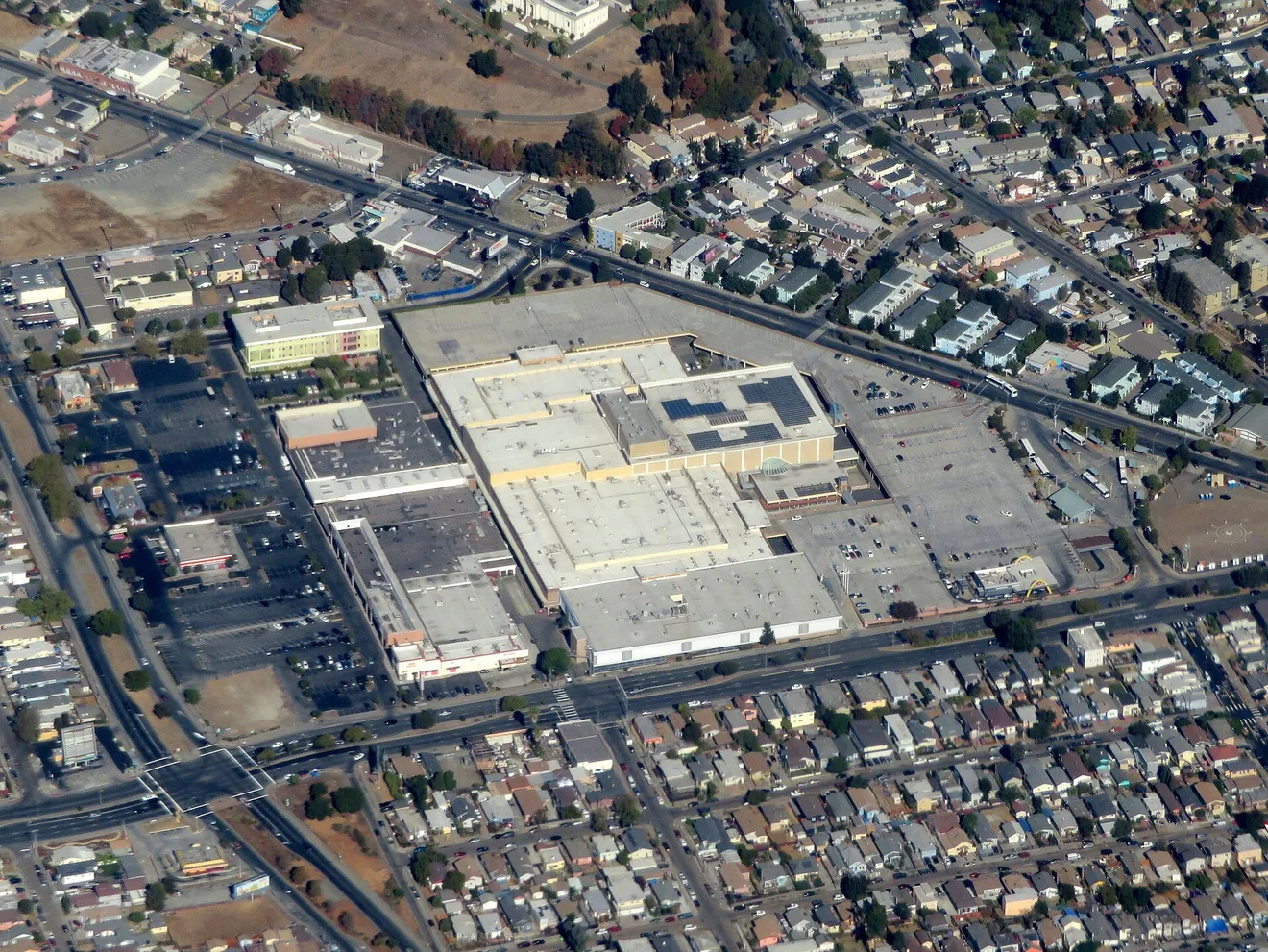
A long-vacant, city-owned lot on Foothill Boulevard in East Oakland is finally getting built on. Eden Housing and the Black Cultural Zone broke ground Oct. 28 on the Residences at Liberation Park, a 119-unit affordable apartment building at Foothill Boulevard and 73rd Avenue, next to the Eastmont Town Center (via The Oaklandside).
The building is the first phase of a larger plan for the site that also includes a market hall, offices for service providers and a performance space. The housing is scheduled to be finished in 2028.
A site with a long history
The triangular lot once held the mall's auto service center, and before that a GM Chevrolet assembly plant, according to The Oaklandside. The city bought it in 2008, and it sat empty for years. In 2020, the Black Cultural Zone, a community development corporation focused on East Oakland, reached an agreement with the city to use the land temporarily. It became Liberation Park, home to a meals program, a farmers market, small-business events and a roller-skating rink.
That temporary use turned into a development plan. The project won streamlined approval under California's SB 35 in January 2023, according to architect Y.A. Studio's project page (Y.A. Studio). In 2024, the city approved a 99-year ground lease and a $1.5 million loan so the Black Cultural Zone could build the homes and the market hall.
What's going up
Y.A. Studio designed the six-story residential building. The 119 apartments are aimed at households earning well below the area median income. The Oaklandside reported a range of 30% to 80% of AMI, while project partners' materials list 20% to 60%. A 2024 description of the plans also called for a basement parking garage and set-asides for residents with special needs (San Francisco YIMBY).
Funding came together the way it usually does for affordable housing: piece by piece. The housing portion carries about $135 million from more than a dozen sources, The Oaklandside reported, including federal, state, county and city money. The city put in around $38 million. Other funders include Wells Fargo, Google, the California Strategic Growth Council, the Housing Trust of Silicon Valley and the Community Arts Stabilization Trust (CAST). Y.A. Studio's page lists a $44.6 million state Affordable Housing and Sustainable Communities award, low-income housing tax credits and tax-exempt bonds among the financing, and the Housing Trust says it made a $1.5 million predevelopment loan through its Google-backed lending program (Housing Trust Silicon Valley).
Oakland Housing Director Emily Weinstein called the project a "catalyst for neighborhood transformation" at the groundbreaking. It's a key piece of Rise East, a 10-year revitalization effort for the area.
Phase two: the market hall
The second phase, a market hall with service provider offices and a performance space, hasn't started construction yet but is expected to finish around the same time as the housing. The Black Cultural Zone is developing it with CAST, which lists the commercial space at about 31,000 square feet (CAST). The firm blink!LAB came up with the design concept, and AE3 Partners is the architect.
"To truly anchor our people, housing must be paired with economic power," Black Cultural Zone CEO Carolyn Johnson said.
The organization has also picked up a smaller vacant lot on MacArthur Boulevard through a county process, for $10, and plans to build affordable housing there too.
Why it matters for Contractors
The housing contract is already spoken for. Y.A. Studio's project page lists a Guzman-Focon joint venture as general contractor, so trades looking for work on the residential building should go through the GC's subcontracting process rather than the developers.
The bigger opening may be what comes next. The market hall hasn't broken ground, and once it does, it will mean commercial work, followed by tenant buildouts for the food vendors and offices that move in. That's the kind of scope small local shops can compete for. The MacArthur Boulevard lot is another project to keep on the radar, though no timeline has been announced.
Affordable projects like this one are stitched together from public money, and public funding often brings its own wage, reporting and contracting requirements. If you want a piece of the work, check the requirements before you bid so there are no surprises on payroll or paperwork.