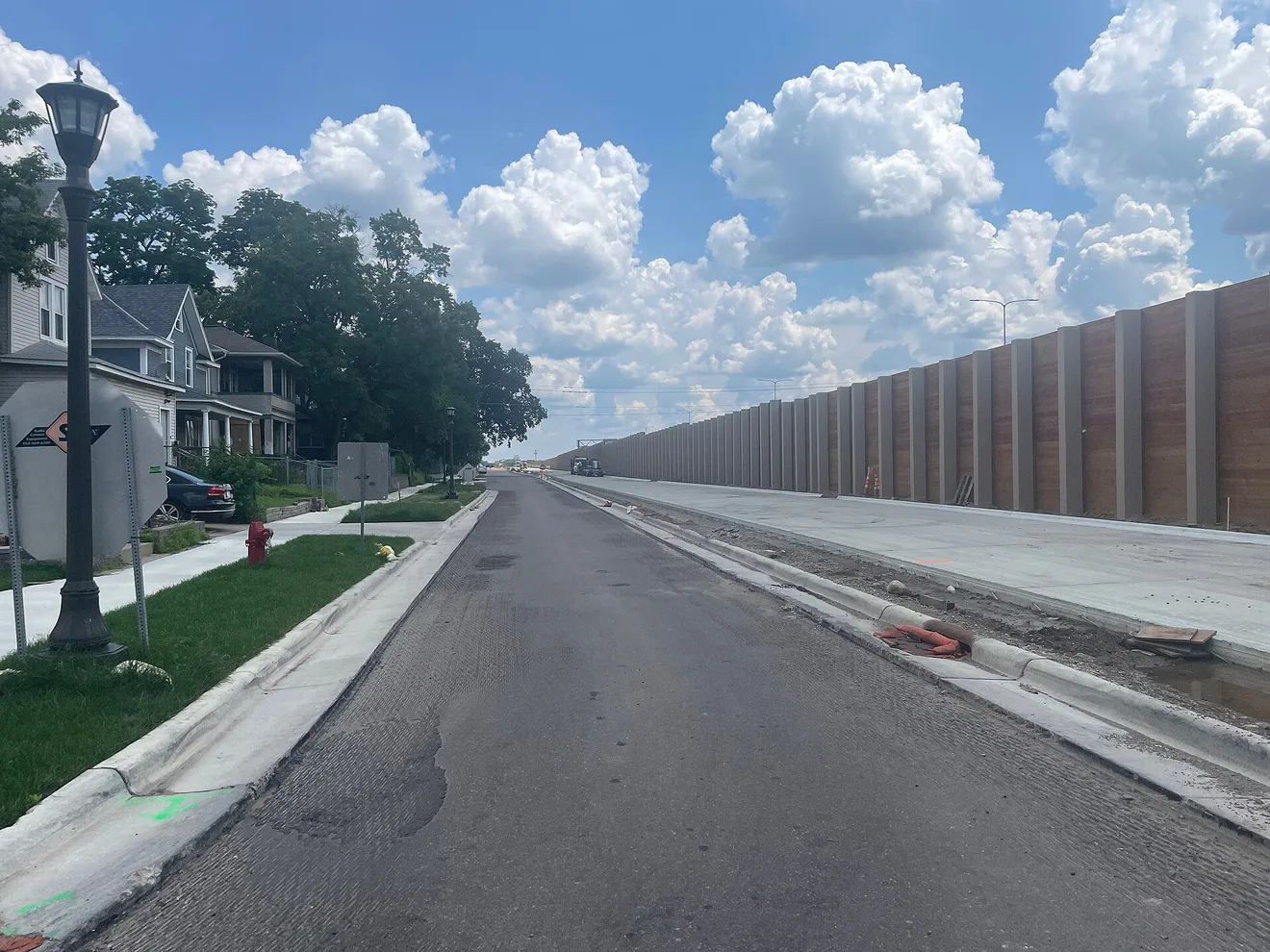
Saint Paul's Housing and Redevelopment Authority is looking for someone to buy and build on a vacant corner lot in Dayton's Bluff, and the deal is sized for a small builder or infill developer. The HRA posted a request for proposals on Nov. 6 for 310 Maria Ave., at the northeast corner of Maria Avenue and Third Street East, with proposals due by 4 p.m. Central on Monday, Dec. 21 (via City of Saint Paul).
The site
The lot measures roughly 136 by 104 feet, about 14,144 square feet or a third of an acre. It's a former community garden, and the city says the garden improvements are to be cleared off before the RFP closes. An appraisal dated Aug. 17, 2026 put the value at $180,000, but the RFP sets no minimum price and says the offer is only one consideration.
The parcel is zoned T1, Saint Paul's lowest-intensity traditional neighborhood district. That allows neighborhood-scale, walkable mixed use, including housing, offices, services and corner commercial buildings. The city revised its T-district rules late last year, with changes that took effect in mid-December 2025, so check the current code before you sketch a building.
Transit is a selling point. A Route 63 bus shelter sits on the corner, and the Gold Line bus rapid transit station at Mounds Boulevard and Third Street is a block away. Metropolitan State University, the Dayton's Bluff Recreation Center and Swede Hollow Park are all within about a half mile, according to the RFP.
The historic district factor
This is the piece that will shape cost and schedule. The lot sits in the Dayton's Bluff Heritage Preservation District, which the City Council created in 1992, so any new building has to be reviewed and approved by the Heritage Preservation Commission. The commission's job, per the city, is to make sure new buildings fit the scale, materials and character of the historic area around them.
The RFP is specific about what it wants: a building that acts as a strong visual anchor for what it calls an important neighborhood gateway, with facades facing both Third Street and Maria Avenue, and massing and height that step down to the neighbors.
What the HRA is looking for
The city prefers higher-density, transit-oriented, mixed-use development. Commercial space is optional. Housing should line up with the city's Housing Action Plan and affordability goals where applicable, though the RFP doesn't set a hard affordability requirement. The neighborhood plan for the area encourages reduced on-site parking paired with a parking management plan.
Proposals will be judged on the proposed uses, consistency with city plans, zoning and preservation guidelines, total development cost including any public help sought, financial feasibility, how quickly the project can start and finish, added tax base, and the team's experience, including its record contracting with minority-, women- and small businesses. The RFP lists no point values. Teams get extra consideration for partnering with the nonprofit Urban Roots to remove the garden topsoil and move it to another garden.
A complete submission includes the HRA general application, a narrative of the uses, a conceptual site plan, an offer price, a timeline, a preliminary sources-and-uses budget, team bios and a short community engagement plan. Proposals go by email to Tia Anderson, principal project manager with Planning and Economic Development, at tia.anderson@ci.stpaul.mn.us. Attachments over 20 MB get bounced, so use a Dropbox or Google Drive link for big files.
What happens after
Staff review starts about two weeks after the deadline. The chosen team can get "tentative developer status," which means an exclusive negotiating window while it finishes design, a market study, environmental work and proof of financing. An application fee is due at that point. The development agreement goes to the HRA board after a public hearing, and closing typically happens within a year. The land is sold as-is by quit claim deed, proposals become public record, and the RFP notes the HRA isn't obligated to sell.
Why it matters for Contractors
City-owned infill lots with no minimum bid don't come up often, and the scoring rewards a realistic budget and timeline over the biggest check. That's a fair fight for a small builder with a solid team. Reduced parking helps on a lot this size, and if your firm has a track record hiring minority-, women- or small-business subs, document it, because it's scored.
Go in with eyes open on the preservation review. Budget time and design fees for historically compatible plans, line up an architect who has worked with the commission, and expect to fund environmental and market work before closing. Questions go to Tia Anderson at 651-266-6545. You have about six weeks.