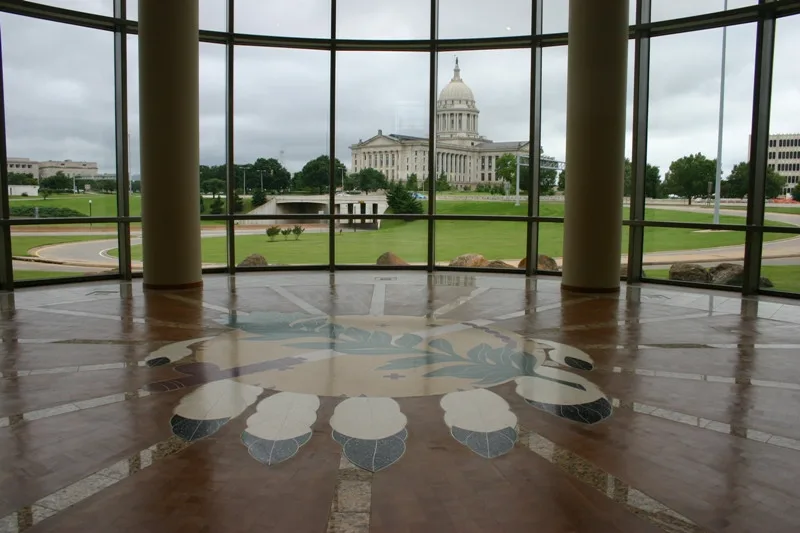
Oklahoma's permitting, plan review and inspection systems got a long look at the state Capitol last week, and one homebuilder brought receipts. A House interim study led by Rep. Emily Gise, R-Oklahoma City, heard from builders, architects, city officials, fire officials and housing advocates on Oct. 28 about how to move projects through faster without cutting corners on safety (via Oklahoma House of Representatives).
The study, IS 26-014, carried the title "Modernizing Plan Review, Permitting, and Inspections in Oklahoma's Growing Cities." It was assigned to the House County and Municipal Government Committee and was one of 92 interim studies House leaders approved for this year, out of 120 requested.
"Oklahoma is growing, and we need processes that support that growth," Gise said.
The sharpest number of the afternoon came from Jalal Farzaneh, founder of Home Creations. He told lawmakers lot costs are one of three big drivers of what new homes cost, and he pushed for more oversight of how permits get handled.
Farzaneh walked through a zoning dispute that started when his company sought approval to expand a single-family development. The fight ended up in court and dragged on for more than three years before a judge sided with Home Creations. By then, he said, legal fees, carrying costs and climbing lot prices had added roughly $15,000 to each home, and that cost landed on buyers.
Tyler Parette, founding executive director of Housing Forward, pointed to the Oklahoma Housing Needs Assessment, which he said projects the state will need 372,593 housing units by 2034, more than 105,000 of them affordable. That assessment was built by University of Oklahoma faculty under a $925,487 grant from the Oklahoma Housing Finance Agency and released in fall 2024.
"For Oklahoma to meet the challenges ahead, the systems that impact housing development need to be firing on all cylinders," Parette said.
Not everyone at the table framed City Hall as the bottleneck. Mike Fina, with the Oklahoma Municipal League, which represents the state's 588 cities and towns, said permitting is just one step in a development process that can run months or years. He argued the idea that local government is what's holding up projects deserves a second look, even though developers often gripe that municipal permitting takes too long.
"We have a very important job to do," Fina said.
Presenters also came from Krittenbrink Architecture, GH2 Architects LLC, the Muscogee (Creek) Nation, the City of Oklahoma City and the Oklahoma City Fire Department.
Ideas floated during the study included public-private partnerships, better communication and transparency between developers and cities, and voluntary modernization that keeps local control intact and avoids unfunded mandates on municipalities. That last point matters: nothing discussed so far would force a city to change how it reviews plans.
Gise said any fixes will be weighed ahead of the 2027 legislative session. She also drew a line on safety.
"Public safety should never be compromised in the name of efficiency," she said, adding that the aim is clearer communication, fewer unnecessary delays and lower housing costs.
The full hearing video is available through the House website's live proceedings archive; search the calendar for Oct. 28, starting at 2 p.m.
Why it matters for Contractors
For a small builder or remodeler, permitting delays aren't abstract. They show up as carrying costs, idle crews and bids that go stale while you wait. Farzaneh's $15,000-per-home figure is one company's experience in one dispute, but it's the kind of number that gets lawmakers' attention, and it's worth tracking your own delay costs the same way if you want a voice in what comes next.
Don't expect quick changes. This was a study, not a bill, and the direction so far leans toward voluntary updates rather than state mandates, so how fast your local permit office moves will still depend on your city. If you work in a growing metro like Oklahoma City, the window to weigh in is between now and the 2027 session. Reaching out to your legislator or your city's development services office with specific, documented delays is the practical move.