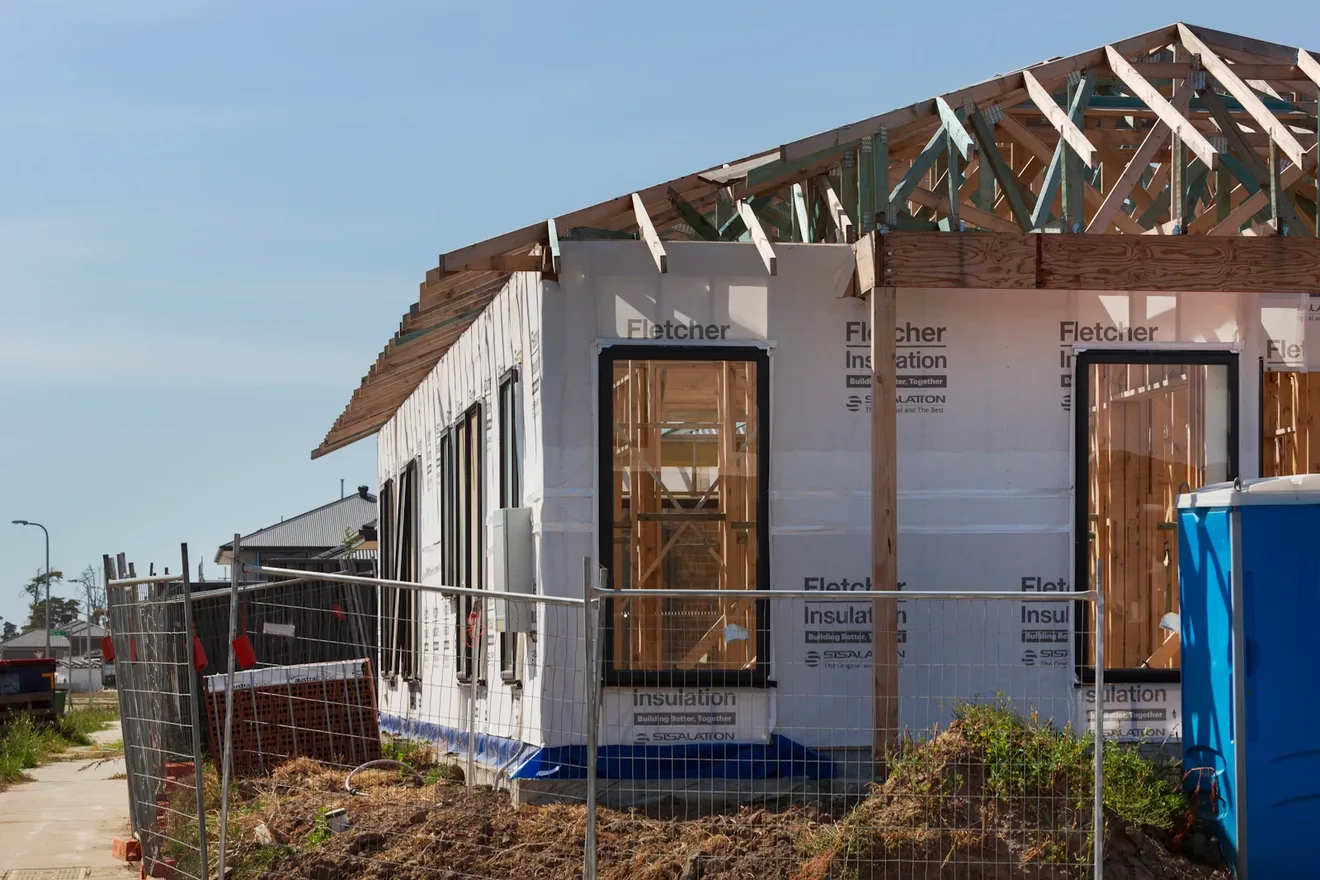
Mitchell's city council has approved a tax increment district to help pay for alley and utility work at Hitchcock Homes, Van Buskirk's 26-unit, for-sale housing project on the site of the city's former First Avenue mobile home park (via Mitchell Republic). Council members signed off on the project plan and boundary for Tax Increment District No. 48 at their regular meeting on Monday, Nov. 2.
The plan calls for 12 single-family homes expected to sell for about $305,000 and 14 townhomes at about $231,900. Work has already started on the first two houses.
The city bought the old trailer park for $1 million in April 2025, according to earlier Mitchell Now reporting, then handed it to the Mitchell Area Development Corporation for $1. In February, the council voted 7-1 for a redevelopment agreement naming Sioux Falls-based Van Buskirk as builder, with a covenant keeping the homes owner-occupied for at least 10 years. That version described 24 homes; the plan approved this month counts 26.
The district covers both sides of First Avenue from Kittridge Street to Hunter Street, plus the block south of First between Hunter and Foster streets, just north of Hitchcock Park.
Here's how the money is supposed to work. The improvements are projected to add roughly $6.22 million in taxable value, and the district is expected to bring in about $1.46 million over its 20-year life. Of $1.45 million in eligible project costs, $531,717 would reimburse Van Buskirk and $923,000 would go back to the city as an "administrative cost" reimbursement toward what it paid for the land. The developer gets paid first. Its certified costs are projected to be paid off in 2036, while the city's share is expected to take until 2046.
The cushion is thin. City Attorney Justin Johnson told the council the projected revenue lands just $2,998 above the reimbursement limit. "If there is a shortfall in that amount, basically we're just recouping less of our costs," he said. He said asking for less would have made the margin look better but cost the city money the district might generate. That same margin is why Planning Commission Vice-Chair Kevin Genzlinger cast the only vote against recommending the plan in late October.
This is also the first district in Mitchell to go through a new state-required independent fiscal feasibility review. Todd Meierhenry of the Meierhenry Sargent law firm did the review for $25,000, a cost that can be reimbursed through the TIF. He noted that a one-year delay in collecting property taxes could cut revenue by roughly $88,027.
Jordan Hefner, operations director for Van Buskirk Homes, told the council the financing would help cover three alleys and new sewer, water and electrical service to bring the site's utilities up to date. "There are an awful lot of development costs that come along with free land," he said. He said Van Buskirk would have come to Mitchell regardless, though it would have had to rethink pricing without the tax breaks.
Not everyone was sold. Resident Steve Sibson challenged the project's "but for" finding (that it couldn't happen without the TIF) and asked the council to drop the city's reimbursement. Former council member Mike Bathke said that without the TIF the city would collect taxes on all 26 homes after 36 months, and reminded the council that tax breaks were meant as a last resort.
As for the schedule, Hefner said the first house should be ready to show by Feb. 1, 2027, and the row of homes along East Hanson Avenue should be done by November 2027. A row of seven townhomes is planned to start in the summer along First Avenue, north of the aquatic center's parking lot.
Why it matters for Contractors
If you're a sub or small builder around Mitchell, this is a live job with a known schedule. Two houses are underway, two dozen more are planned, and the TIF money targets alleys and utilities, so there's site, underground and electrical work on top of the usual framing, mechanical and finish trades. Earlier Mitchell Now coverage said Van Buskirk planned to use local subcontractors, so it's worth reaching out now rather than after the townhome rows start.
The bigger takeaway is about how these deals get built. The new state feasibility review added $25,000 and more scrutiny, and the warning about a one-year tax delay shows schedule slips hit the financing, not just the builder. If you're ever on the developer side of a small-town TIF, budget for that review and expect questions on the numbers.
And Hefner's point about free land holds for anyone who's priced infill: a $1 lot still has to carry utilities, alleys and site work before a wall goes up.