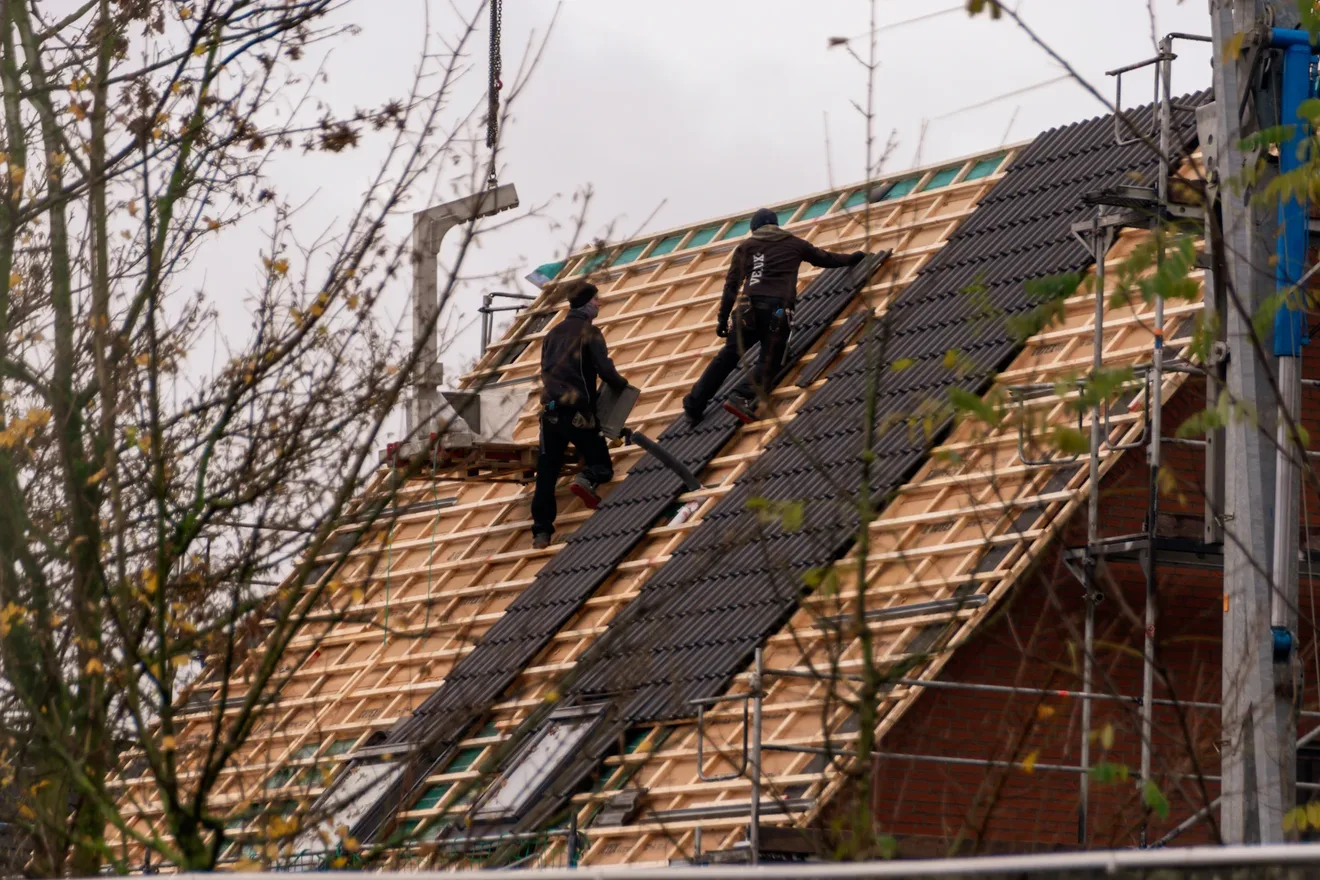
A Middle River man accused of taking a $4,750 down payment for a roof replacement in Owings, never starting the job and never giving the money back is due in Calvert County District Court on Monday, Nov. 9, according to court records and charging documents described by The BayNet (via The BayNet).
Louis John Milanovich, 36, faces five charges brought by investigators with the Maryland Home Improvement Commission (MHIC): felony theft of property valued between $1,500 and $25,000, plus four counts under the state's home improvement law. Those four are contracting without a license, selling home improvement services without a license, failing to perform a contract, and collecting more than the legal limit as a down payment.
These are allegations laid out in a charging document. None of them has been proven in court.
According to the application for a statement of charges, as reported by The BayNet, two Calvert County homeowners signed an agreement on or about June 9, 2026, with Milanovich, who was doing business as L.M. Roofing LLC. The job was a roof replacement at their Owings home for $9,500. They paid half of that, $4,750, up front.
Investigators say the work never started. The homeowners reportedly reached out several times asking when the crew would show up, got excuses, and eventually stopped hearing back. Their requests for a refund went nowhere, according to the charging document, and they took the matter to the MHIC on Aug. 6.
When the commission checked its licensing records, it found Milanovich didn't hold a valid Maryland home improvement contractor license, the statement of charges says. An application for criminal charges was filed in Calvert County District Court on Sept. 23.
The case has shown up in two other places. Southern Maryland News' Calvert Recorder covered it in a Sept. 29 police briefs roundup, also reporting that MHIC investigators found Milanovich, operating as L.M. Roofing, wasn't licensed, and that he faces felony theft and home improvement charges with a court date of Nov. 9. And the state's public District Court docket for Calvert County lists Milanovich, case D-041-CR-26-001175, for 10:30 a.m. Monday, Nov. 9, in Courtroom 2.
The deposit is where this case touches every home improvement contractor in Maryland. State law says a contractor can't take any payment before a home improvement contract is signed, and can't take a deposit of more than one-third of the contract price before or at signing (Business Regulation 8-617). On a $9,500 roof, one-third works out to about $3,167. That puts the alleged $4,750 deposit roughly $1,583 over the line, which is the basis for one of the charges.
The licensing piece is just as plain. The MHIC says only licensed contractors may enter into contracts with homeowners for home improvement work. Subcontractors can work without their own license, but only for an MHIC-licensed contractor. A violation of the home improvement law is a misdemeanor carrying up to a $1,000 fine, six months in jail or both, unless a stiffer penalty applies elsewhere. The theft count is the felony here, charged under Criminal Law 7-104, according to The BayNet.
There's one more detail homeowners often learn too late. The MHIC Guaranty Fund can reimburse a homeowner up to $30,000 for losses on a bad job, but the commission says it applies only to work done by licensed contractors. Hire someone without a license and that safety net isn't there.
Why it matters for Contractors
Cases like this make homeowners wary of handing over any deposit, and that hits licensed shops that play it straight. A few practical moves:
Keep your deposit at or under one-third of the contract price, and don't take a dime until the contract is signed. On larger jobs, tie the rest to clear milestones in writing.
Put your MHIC license number on your estimates and contracts, and point customers to the state's online license lookup. Being licensed is also what makes them eligible for the Guaranty Fund, which is a real selling point against a cheaper unlicensed bid.
If you sub out work, check that the contractor you're working under is licensed. Your ability to work without your own license depends on theirs.
And if a job slips because of weather, materials or crew, tell the customer early and in writing. The failure-to-perform count here rests on investigators' allegation that the work never began and the homeowner's calls went unanswered.